

Blogging the Middle Ages: Leiden Medievalists Blog #200
On the occasion of the 200th “bloggiversary”, the current editors of the Leiden Medievalists Blog take a retrospective look at the blog’s history.
Origins and editors
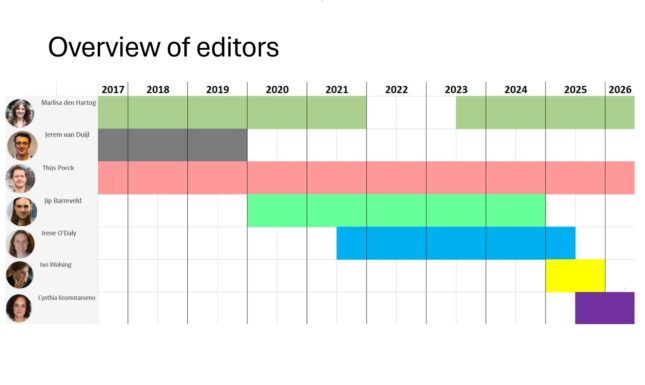
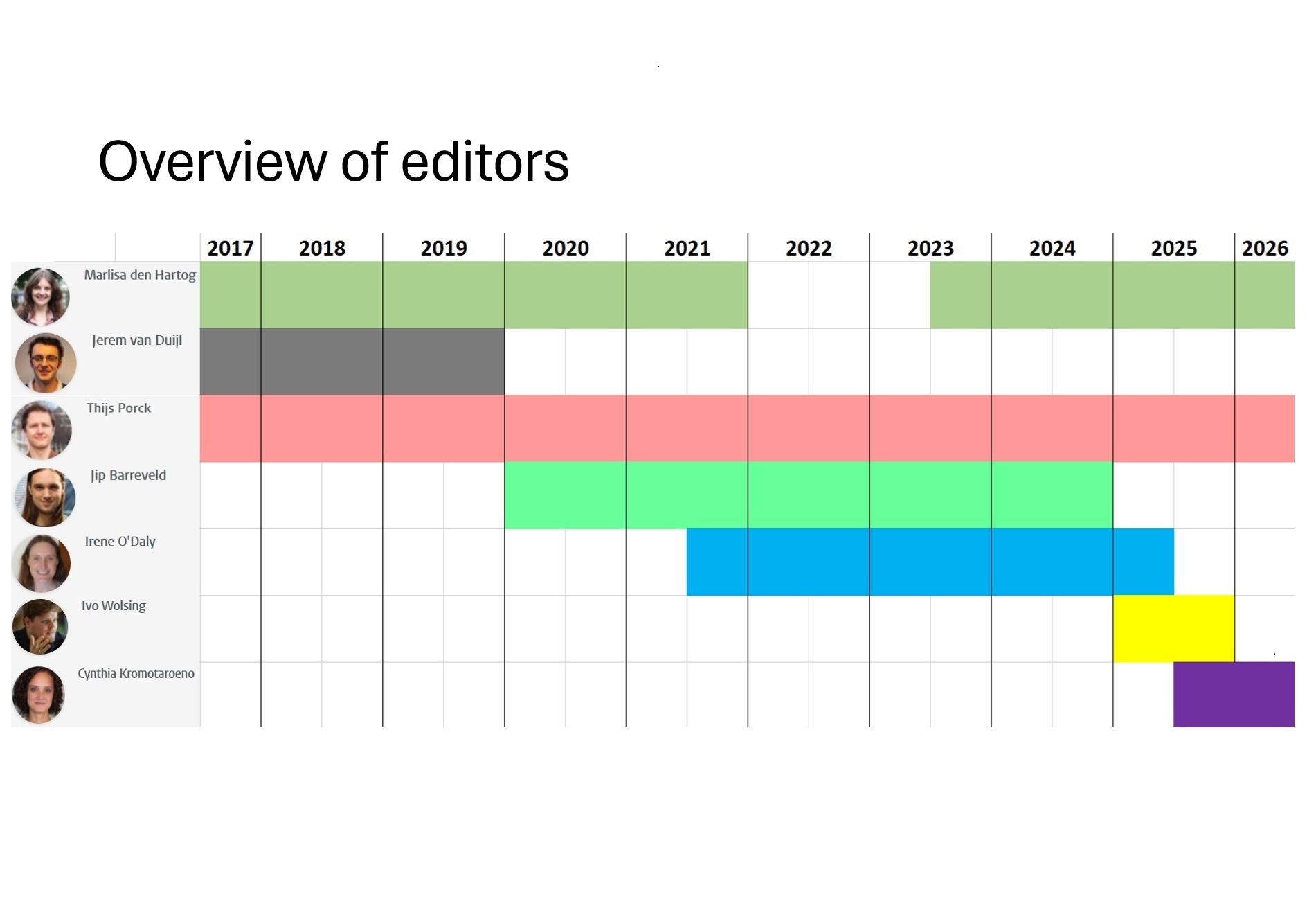
The Leiden Medievalists Blog was founded on 13 October 2017 by Marlisa den Hartog, Jerem van Duijl and Thijs Porck. Their idea was to create a platform that would allow Leiden-based medievalists to share their research with a broader audience and showcase the rich diversity of medieval research at Leiden University. Since then, a changing line-up of three to four editors (see graph below) has worked with no fewer than 99 different Leiden medievalists to publish 199 blog posts at a roughly biweekly schedule (the blog has generally been on hiatus in the summer and winter recess). These 199 blog posts have amassed a total of over 2.6 million views to date.
For this 200th article on the blog, the current editors made a basic database to gain some insights into the blog’s own history. Who were our authors? What times, places, and topics did they study? And which stories had the broadest appeal?
The Leiden Medievalists Blog community
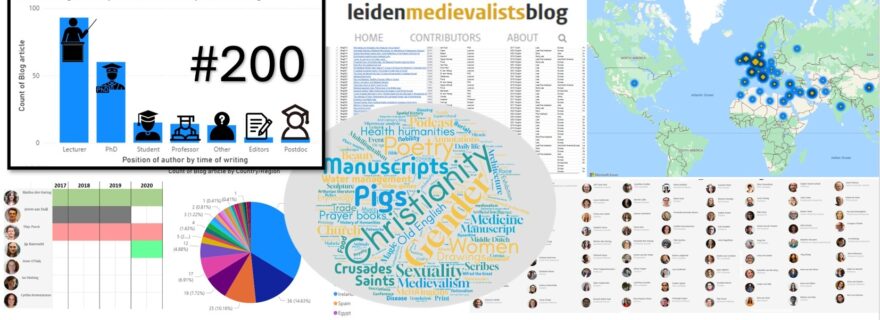
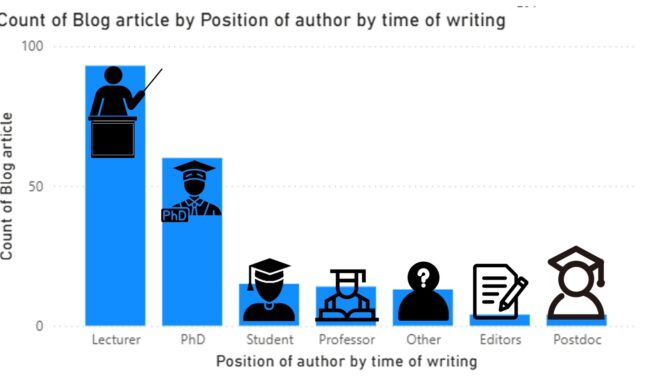
The 99 authors of the blog come from a great variety of disciplines, including cultural, legal, socio-economic, political and military history, as well as art history, archaeology, book history, philology and literary studies. The blogs are written by authors from different academic positions. About 46% are written by lecturers and 7% by professors, but many blogs are written by medievalists in the first stages of their academic career as well: 30% are written by PhD’s and 7% by promising BA and MA students.
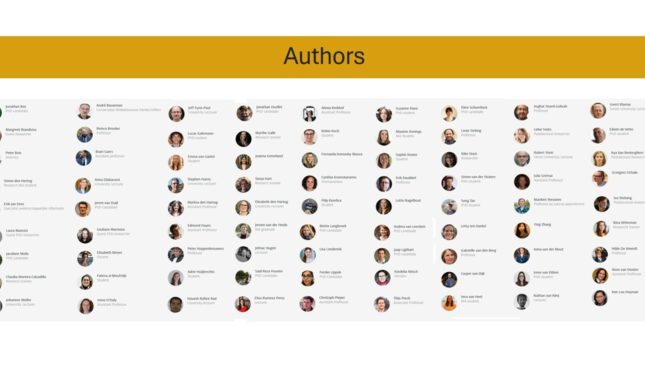
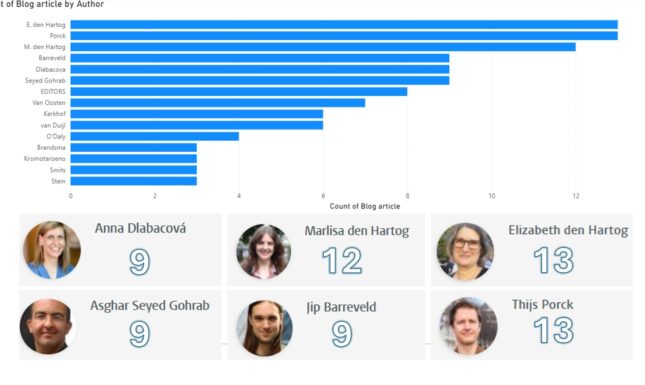
More than half of the articles are written by returning authors, with several authors contributing to the blog in great numbers. Among the most productive bloggers, three medievalists stand out for contributing no fewer than 9 blog articles each: Anna Dlabacova, a specialist in Book History, has written on manuscripts and early printed books, discussing the ways in which medieval people engaged with them, writing and doodling on the text, and re-using and editing the woodcuts; former Leiden Professor Asghar Seyed Gohrab wrote a series of blogs on medieval Persian poetry and its afterlife; and archaeologist and former editor of the blog Jip Barreveld wrote blogs on various Early Medieval topics like Merovingian palaces and princely tombs. Two long-serving editors of the blog, Marlisa den Hartog (who wrote 12 blogs on the topics of magic, gender, and sexuality) and Thijs Porck (writing 13 ‘hog blogs’ on the cultural history of medieval pigs) are in the top 3 of most productive authors. The top contributor to the blog has been medieval art historian Elizabeth den Hartog with blog posts on diverse topics, ranging from textual amulets to sculptures of face coverings and illustrated rent books; she has agreed to write her fourteenth(!) blog this summer.
The Global Middle Ages
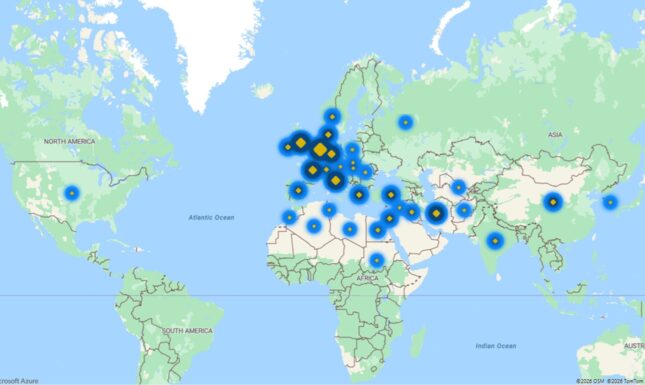
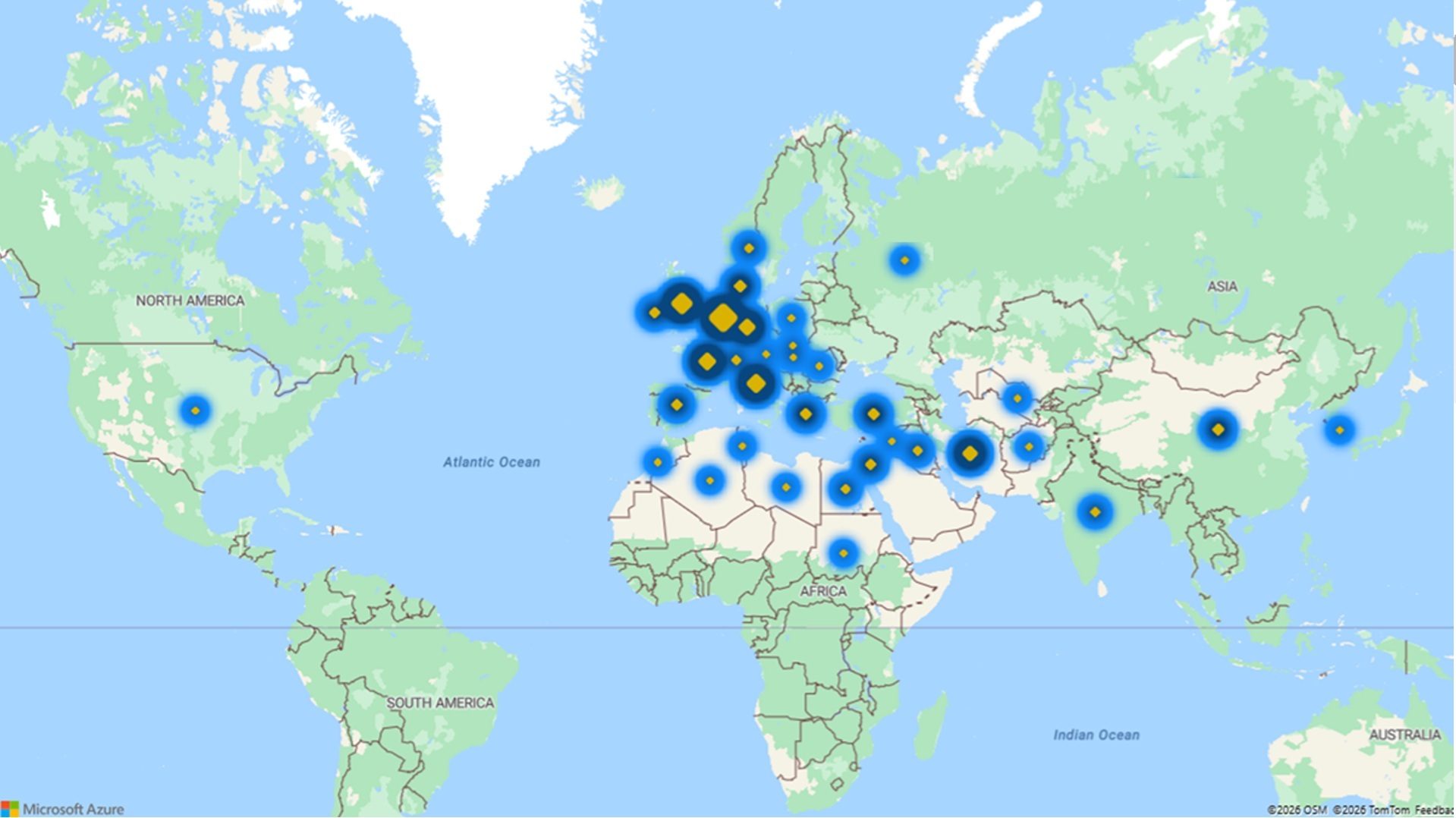
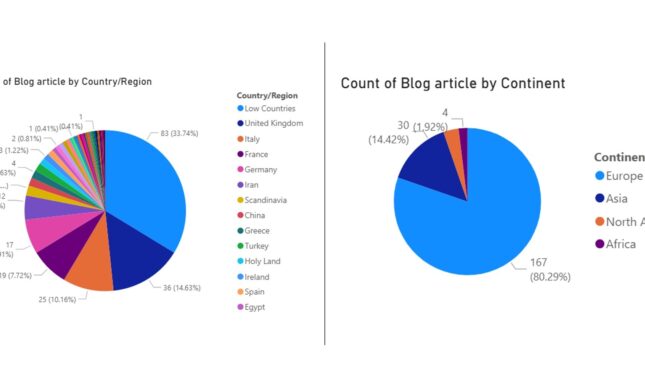
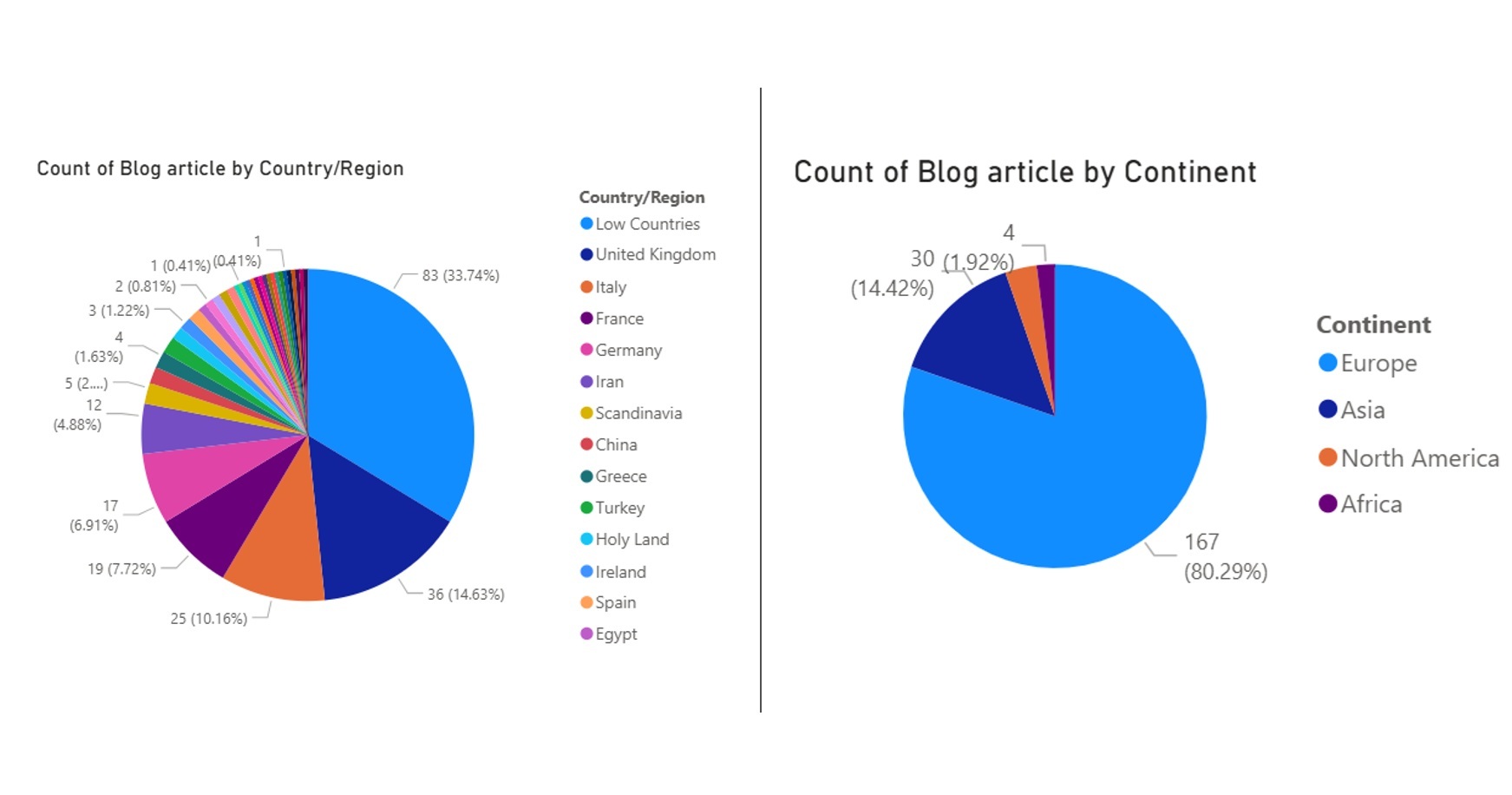
Perhaps unsurprising for a blog that is affiliated to a Dutch university, roughly one third of the blog articles (83) discusses sources from the Low Countries. Other regions that are particularly well represented include the United Kingdom (26), Italy (19), France (19), Germany (17) and Iran (12). While the greater majority of blogs focuses on the European Middle Ages, the blog also reflects the great geographical variety of Leiden specialists working on the Middle Ages. There are many blogs on medieval Asia, for instance, as well as Northern Africa, including articles on Egyptian monks, a submerged Nubian cathedral, robots at the Baghdad court, and nationalism in medieval Korea. Even North America is included, as there are many blogs discussing the influence of medieval authors on modern literature and popular culture.
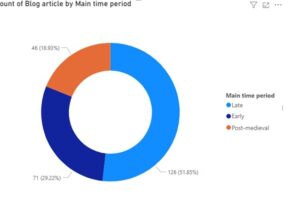
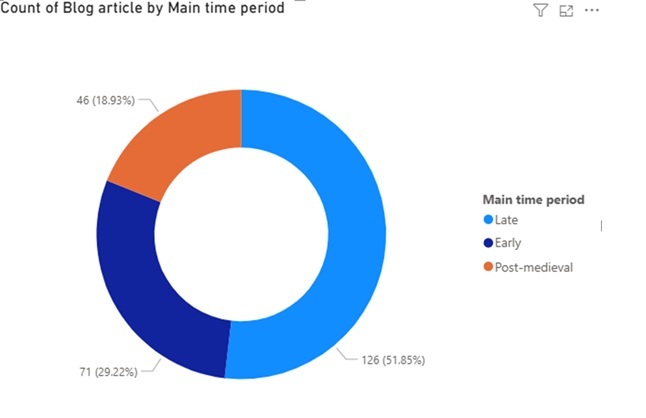
The articles on the blogs also reflect the chronological variety of research on the Middle Ages. About one third of the articles is focused on the 5th
to 11th centuries, while more than half of the articles discusses the 12th to 15th centuries. Many of the blogs are “post-medieval” as well, as they discuss different instances of Medievalism, ranging from blogs on nineteenth-century medievalists, to the depiction of the medieval Middle East in games, and the consequences of “medieval images” created through generative AI.
Popular Themes
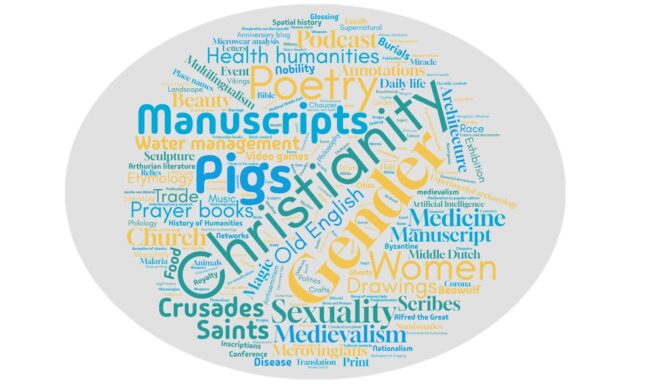
As this thematic wordcloud below demonstrates, the 199 blog articles on the Leiden Medievalists Blog are wonderfully diverse. The size of the words reveal how often these themes appear in the Leiden Medievalists Blog dataset. Apart from “Pigs” (thanks to the series of ‘ hog blogs’ by editor Thijs Porck), these most frequent themes include “Christianity”, “Gender” and “Manuscripts”. Blogs labelled Christianity range from studies of early medieval saints’ lives, to cremation burials, devotional dolls for nuns, and the (forged) discovery of relics. “Gender” is a recurring theme as well, with articles on topics like gender segregation in medieval churches, female agency in Spain and in China, supposed “gender reveal tricks”, and the connection between hair and masculinity. Among the blogs focused on “Manuscripts” we find a striking number of articles on doodling, including these by Stein, Witteman and Kwakkel, as well as articles on the digitization of medieval manuscripts and developments in automated reading.
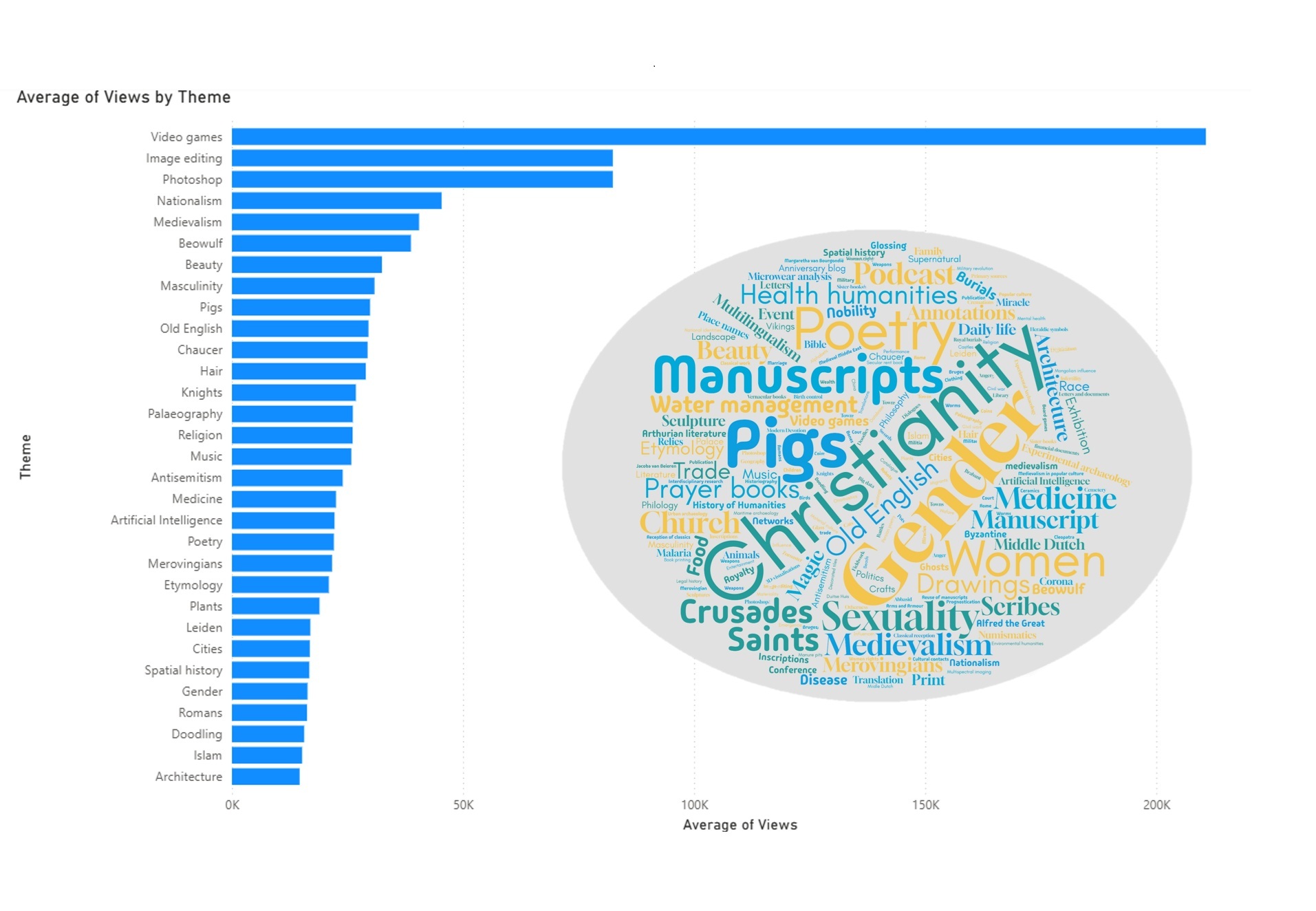
On the whole, the Leiden Medievalists Blog has been visited over 2.6 million times. But what themes had the broadest appeal? The two most viewed blogs are written by etymologist and historian Alexia Kerkhof, and they both have to do with video games. In these blogs, Kerkhof discusses the historical (in)accuracy of medieval city-builder games and the depiction of medieval pigs. The other articles in the top 10 include two blogs on beauty standards (one on Renaissance makeup and one on Early Medieval beards); three blogs on Persian poetry and its nachleben; two blogs on medieval pigs; and a blog on “Photoshop” in medieval manuscripts.
Conclusion
The 199 blog articles that have appeared on the Leiden Medievalists Blog since 2017 have attracted over 2.6 million views, have inspired various spin-offs and media appearances (including the blog’s own podcast ‘ Middeleeuwse Toestanden’ and the interviews with Leiden medievalists in the podcast ‘Middeleeuwen’); and have given a voice to almost one hundred different members of the Leiden medievalists community. As editors, we are already looking forward to publishing the next 200 blog articles, as well as welcoming our 100th and, who knows, even our 200th author! Above all, we hope that our readers agree that the blog articles that have appeared thus far demonstrate the rich, vibrant nature of research into the Middle Ages at Leiden University!