The Leithon experiments

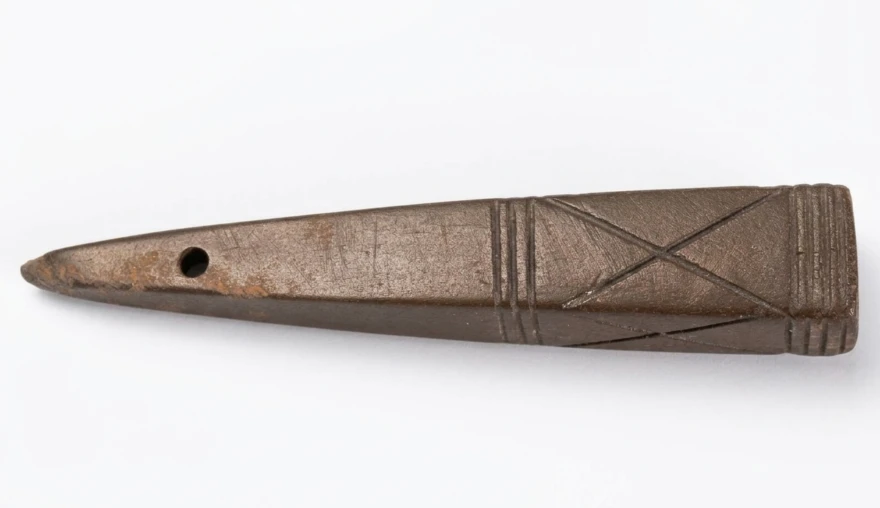
This eerie title might suggest a sinister historical story (or is it just me), but it is actually a follow-up to an earlier blog post about the Leithon 'amulet' that was published on 29 May on the Leiden Medievalists Blog.
Written in collaboration with Jip Barreveld, Jolijn Schalkwijk and Frank Wiersema.
In that earlier blog post, it was concluded that this type of object would have functioned perfectly as a nalbinding needle, but that the real story behind the Leithon 'amulet' might remain shrouded in mystery forever.
This post acted as a catalyst for a new collaboration between two editors of the Leiden Medievalists Blog (both archaeologists, including yours truly), a textile specialist, and an archaeology student who is willing to take on the challenge of reproducing the Leithon 'amulet'. The goal of this fellowship is to conduct experiments, test multiple hypotheses, and, hopefully, gain more insight into these early medieval objects.
Embedded in experiments
Experimental archaeology is deeply embedded in the history of the Faculty of Archaeology in Leiden. Many generations of archaeologists have dipped their toe in experimental archaeology at some point in their training. In the past, experiments were conducted in large outdoor programmes in Horsterwold and, more recently, at the archaeological park Masamuda. Besides that, many individual experiments have been carried out, together creating an impressive collection of more than 4,000 pieces. Looking into this collection gives a glimpse of all these archaeologists, both in their early and senior careers. Some stayed in archaeology, while others pursued different paths, leaving their experiments as silent remnants of their time at the faculty. When working for hours on end at the microscope, with EDM playing through my earphones to keep a steady workflow, seeing these (often familiar) names on experimental forms brings back a sense of nostalgia.
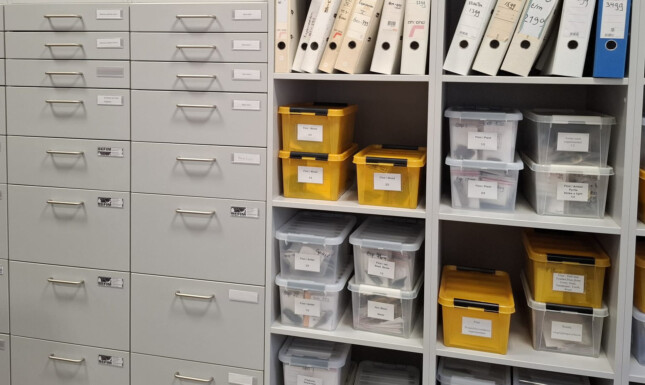
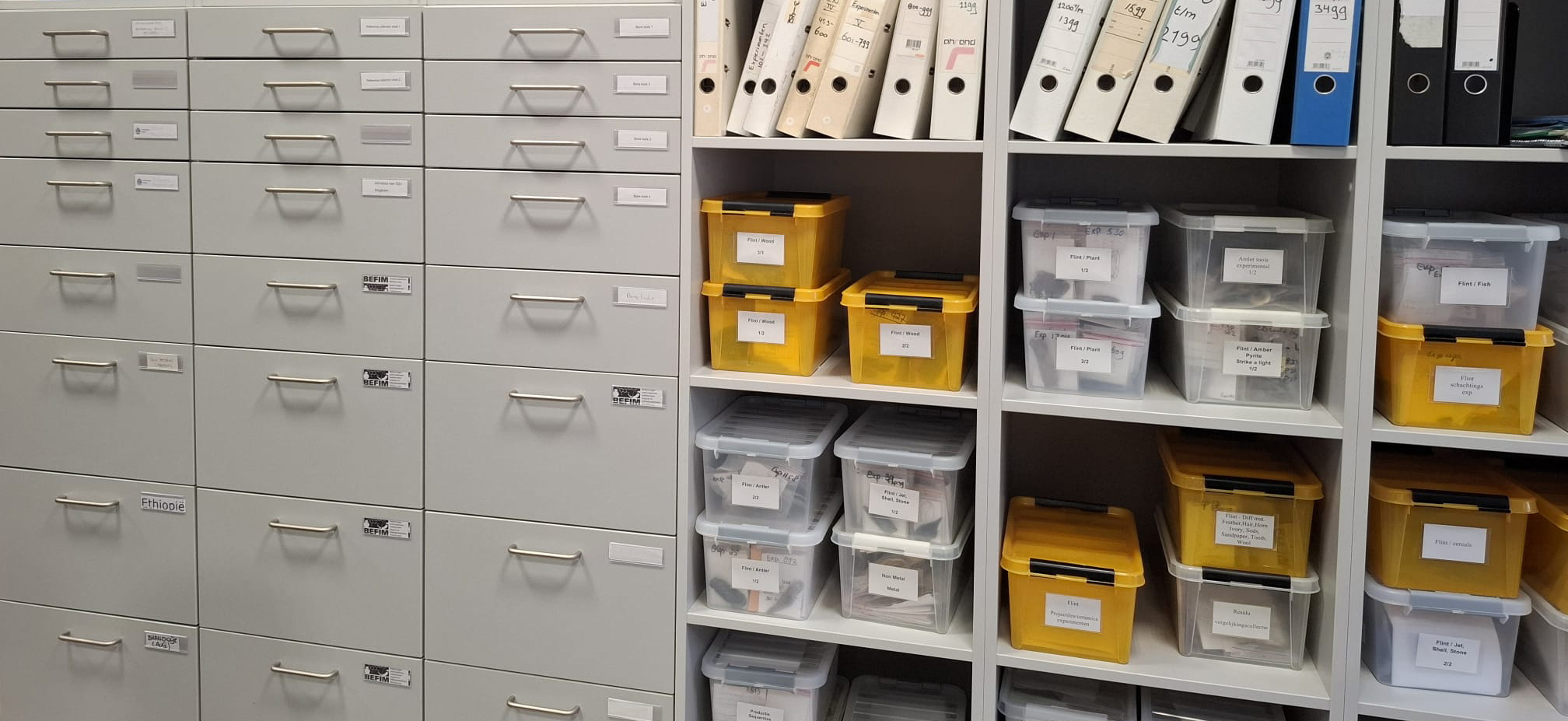
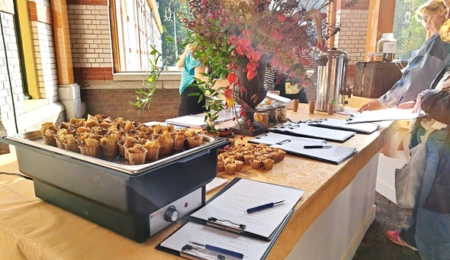
In the boxes and drawers in which this massive collection is treasured (see fig. 1), experiments with dimensions similar to those of the Leithon 'amulet', used either as a nalbinding needle or as a pendant, are absent. At the same time, many details about nalbinding in the early medieval period remain unknown. Was nalbinding already widespread in this area? Which materials were used and what fibre properties were preferred? Or was the 'amulet' actually worn as a pendant, for example, rubbing and bouncing against a (woollen) garment? Could one of these experiments recreate traces similar to those found on the Leithon 'amulet' and solve the mystery of this trapezoid-shaped object?
Unravelling the past
If so much is unknown, how do we know what to do, and how to do it, during experiments? Since one of my bucket-list wishes, time travelling, has not (yet) been invented, it is impossible to actually sit down with these people, observe what they are doing, and bombard them, like a curious toddler, with the question 'why?'.
Historical sources can occasionally point us in a general direction, but more often than not, they fail to provide us with the specifics. Even now, living in a digital era, we probably document more than ever, yet we still do not record every trivial, everyday action. For example, most of us do not document how we hold our toothbrush, how we store it, or how we reuse it to scrub a corner of the bathroom once the bristles are in too poor a condition to function as a toothbrush. At the same time, many of the actions we undertake reflect a great deal about us as individuals, as well as about our (material) culture and our technological system, yet at the end of the day they only leave traces.
Given that time-travelling is not an option and that people in the early medieval period did not record every trivial detail of their daily lives, how, then, do we proceed? And then Morgan Freeman comes around the corner. When I watched the documentary Through the Wormhole (narrated by Morgan Freeman), it planted a seed that has bloomed as experience built up over time. By using the analogy of a chessboard, it was argued that there are basically three pathways to figure out the right pattern on this board, or in our case the ‘technological choices’ of the past. These can be approached from an all-knowing position (which, even with a time machine, I would never attain), a more systematic approach (when experiments are based on archaeological reports, historical sources, and the like, and we work systematically through them), or a random local (or trial-and-error) search. Mathematically, this random approach works surprisingly well for finding the right squares on the chessboard. In archaeology, however, I would choose a mixture of the systematic and the random approach to reconstruct the technological choices that were made in the past.
The random approach: Dorestad's fishy business
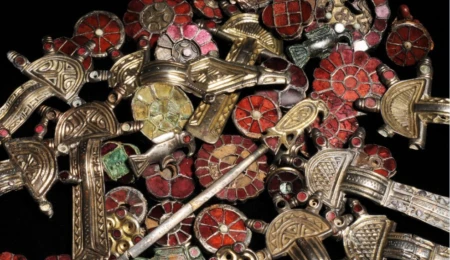
Early medieval Dorestad has a wide variety of needles, but some of them stood out because of their rather crooked tips (see fig. 2). Moreover, the microscopic traces were like nothing I had seen before, and to be honest, I had no clue (see fig. 3).
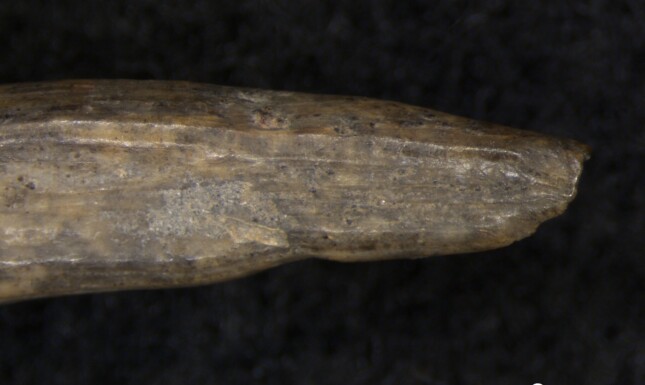
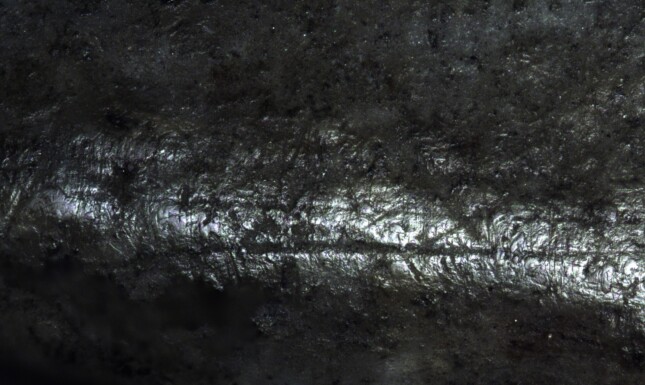
Fig. 2 & 3: Left, tip of one of the needles from Dorestad (RMO, WD357); right, microscopic image of the surface showing fish traces (RMO, WD385).
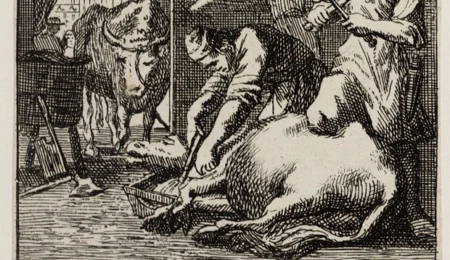
One day, a fellow experimental archaeologist and use-wear analyst (a combination that goes hand in hand) came in with fresh fish. If we wanted to do more experiments, we needed to hurry and do it right away. Since the obvious experiments I could think of were already done, such as descaling and shooting fish, I had to come up with something different that didn't need a lot of preparation time. So I dropped everything I was doing, went through a bag of bone remains, and found some pointed pieces. With little to no preparation, I used them to stab into a whole, fresh fish.
Thanks to this rather haphazard decision, I got traces similar to those on these crooked needles, suggesting they were pushed through a whole piece of fish, creating contact traces of scales, skin, bones and soft tissue. This kind of 'bycatch' shows that random choices once in a while can solve puzzles that otherwise remain unsolved.
Back to basics
A trapezoid-shaped object made of antler is not something you can click and buy on Amazon. The same goes for wool that is guaranteed not to be chemically treated, bleached or dyed, while also being available in a variant with and without lanolin. Another problem, which might sound a bit picky, is that some people tend to produce beautiful replicas that are polished and shiny. When such a reproduced piece is used in an experiment, polish builds up on top of existing polish. Obviously, archaeological objects in the past were often polished with the aid of, for example, grindstones or plant fibres. The difference is that the intention of experiments is not to create a complicated biography that needs to be analysed in itself, but to create a clear image of the traces produced when performing a specific activity with a specific material. With this in mind, our team begins by producing the basics for the Leithon experiments: replicas of the Leithon 'amulet' made of antler and some naturally treated wool yarn.
So our journey begins
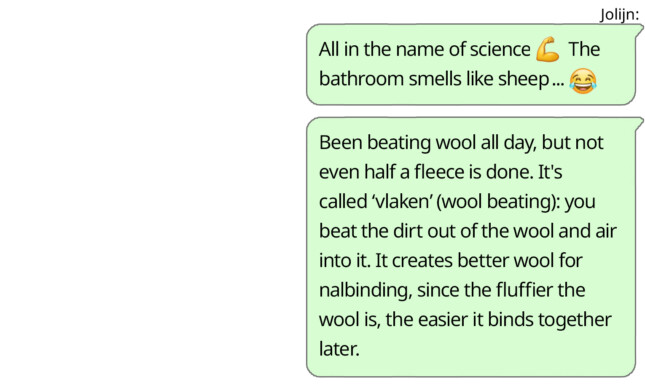
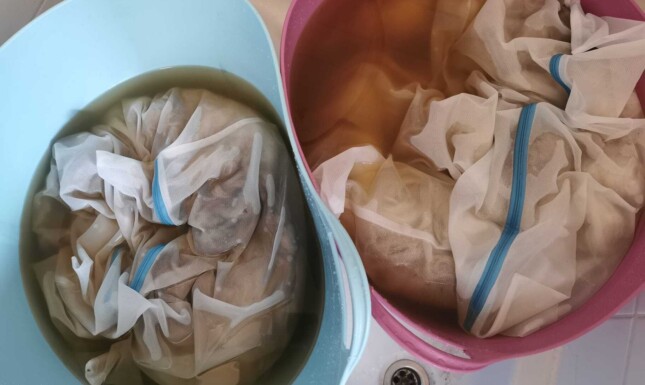
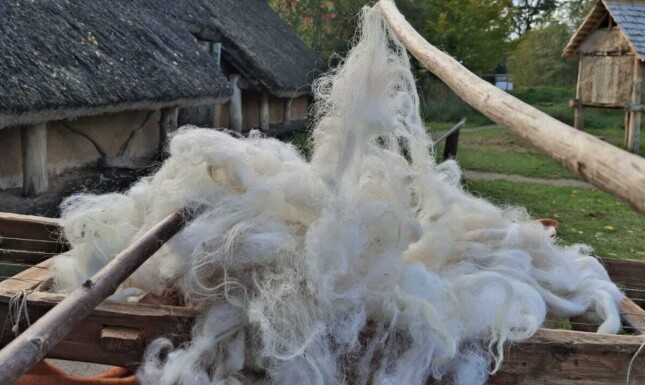
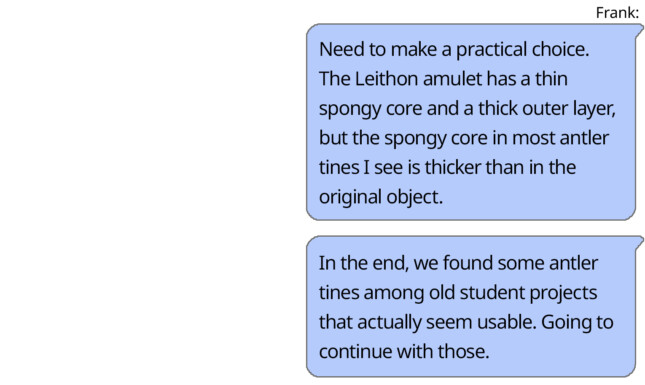
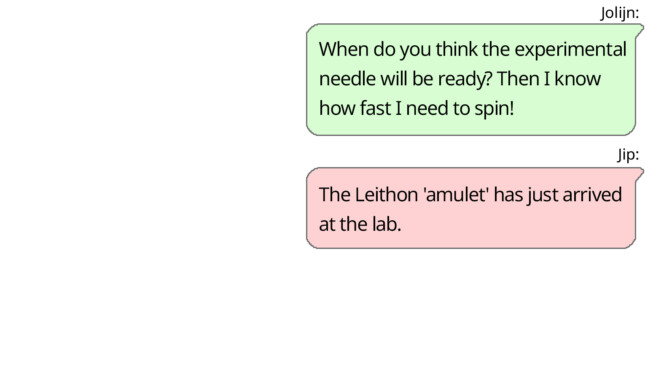
What follows is a simplified version of our chat history, with the permission of the team members, of course. Our team members are, in order of appearance: Jolijn (textile specialist), Frank (student who makes antler tools), Cynthia (use-wear analyst & LMB editor), Jip (archaeologist & LMB editor).
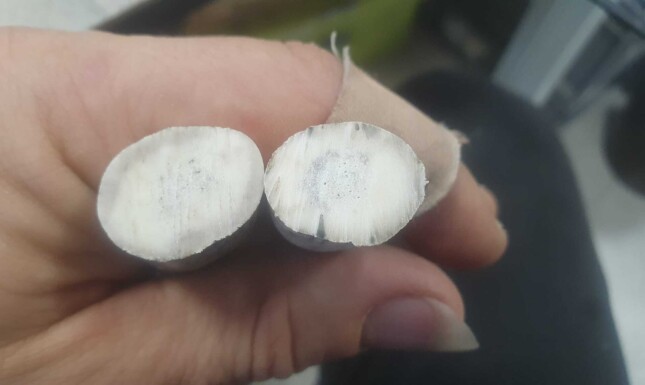
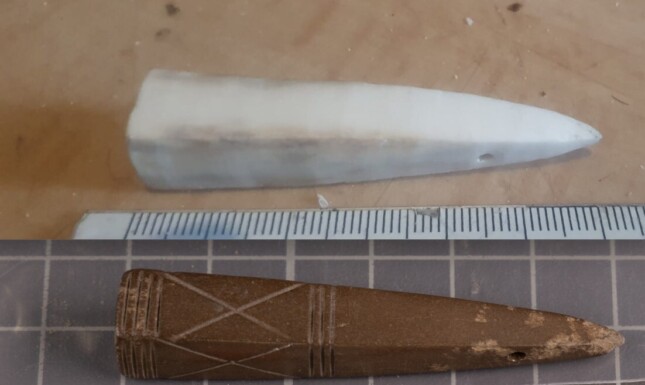
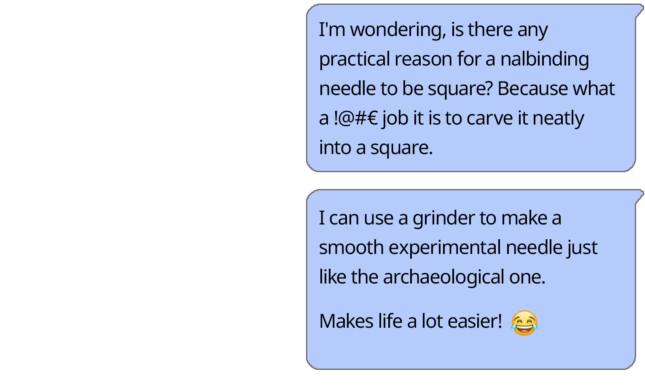
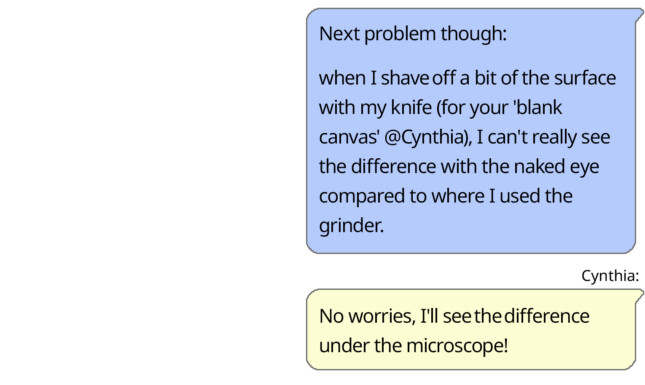
Soon the replicas and the early medieval object will finally meet under the microscope.
To be continued...
Further reading:
Starting point of our journey: Of Donar and Mittens. The Leithon 'amulet' as nalbinding needle - Leiden Medievalists Blog
For a nice stroll through the past (and to see where people recently came together to do experiments for the Putting Life into Late Neolithic Houses project), visit Masamuda – educatief archeologisch erf in Vlaardingen
If you want to know more about the specific segment in Through the Wormhole, episode 'Did God Create Evolution?', read Scott Aaronson's blog: https://scottaaronson.blog/?p=1487
If you would like to know more about the fish needles from Dorestad, or are curious about the descriptive nature of use-wear traces, microscopic photography, and experiments with fish, see SPF+-+WBRG-+33+Satinem+Kromotaroeno+V003+BAT+BD.pdf