

Antonello Who?
Last summer, four works by the Italian renaissance painter Antonello da Messina were stolen from a regional museum in Messina, Sicily. This blog post explains the significance of Antonello’s paintings for understanding renaissance art, and their value to the local community.
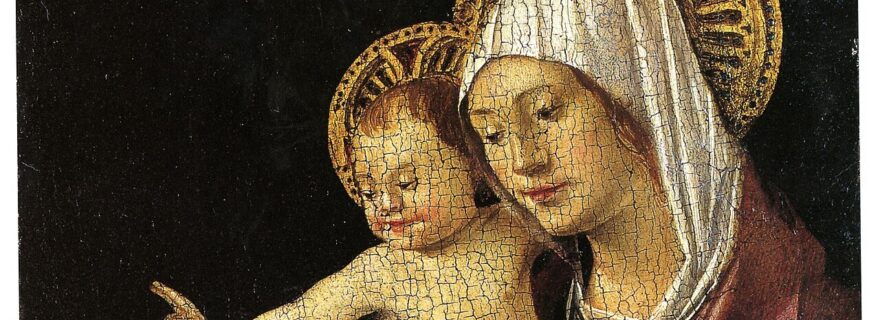
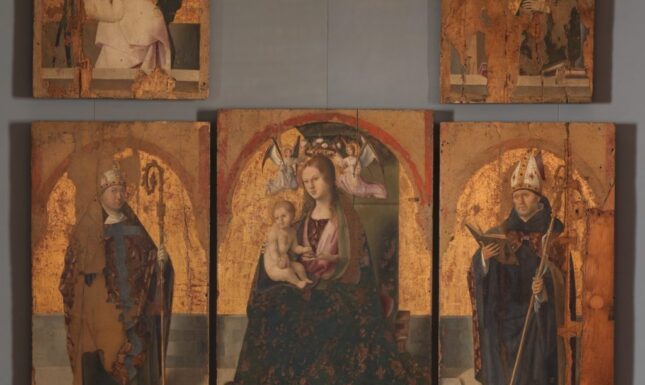
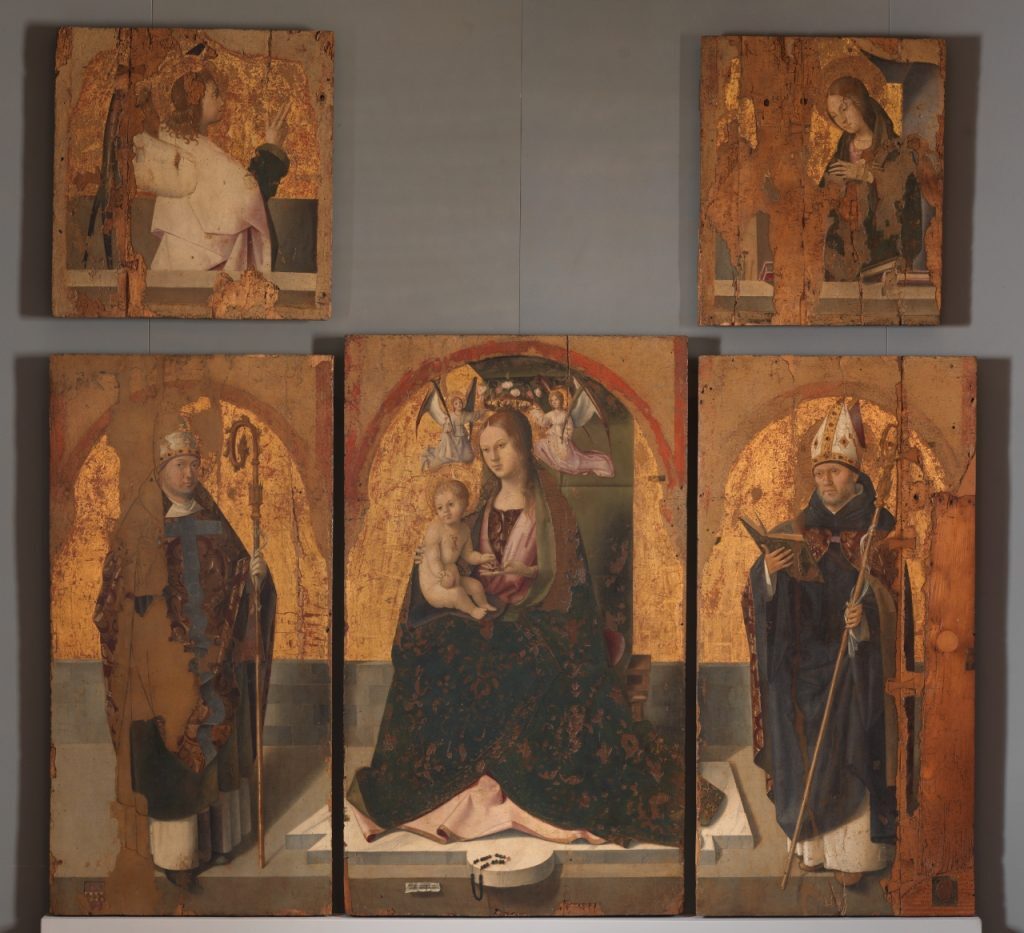
In the evening of 15 August 2026–on Ferragosto, one of the most important religious holidays in Italy–four works by the fifteenth-century Sicilian painter Antonello da Messina were stolen from the Museo regionale Accascina di Messina, a regional museum in Messina, Sicily, which also houses two important altarpieces by Caravaggio. Three works were panels of Antonello’s San Gregorio polyptych from 1473 (Fig. 1) while the fourth work was a small, double-sided painting intended for private devotion depicting a Madonna and Child blessing a Franciscan friar in prayer on the one side and Christ as the Man of Sorrows on the other (dating c. 1465-70). As news of the theft was reported worldwide, photos of the stolen works circulated online and in print media, showing wooden panels in a state of preservation that, for lay people, seems quite poor. The painted surfaces of the devotional painting show a dense pattern of fine cracks (also known as craquelure), while the San Gregorio polyptych panels (the annunciation panels, in particular) show such heavy abrasions that significant sections have lost their paint entirely. If you would add the limited renown this painter has outside of Italy (and aside of specialists in Italian renaissance art), people hearing of the theft may have wondered who this Antonello fellow was and why the thieves had targeted these works (and not Caravaggio’s, for instance).
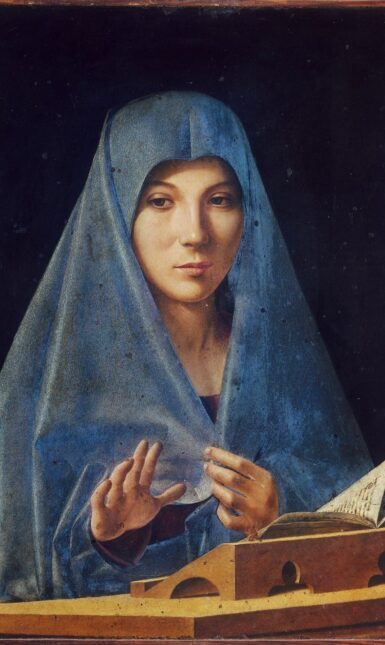
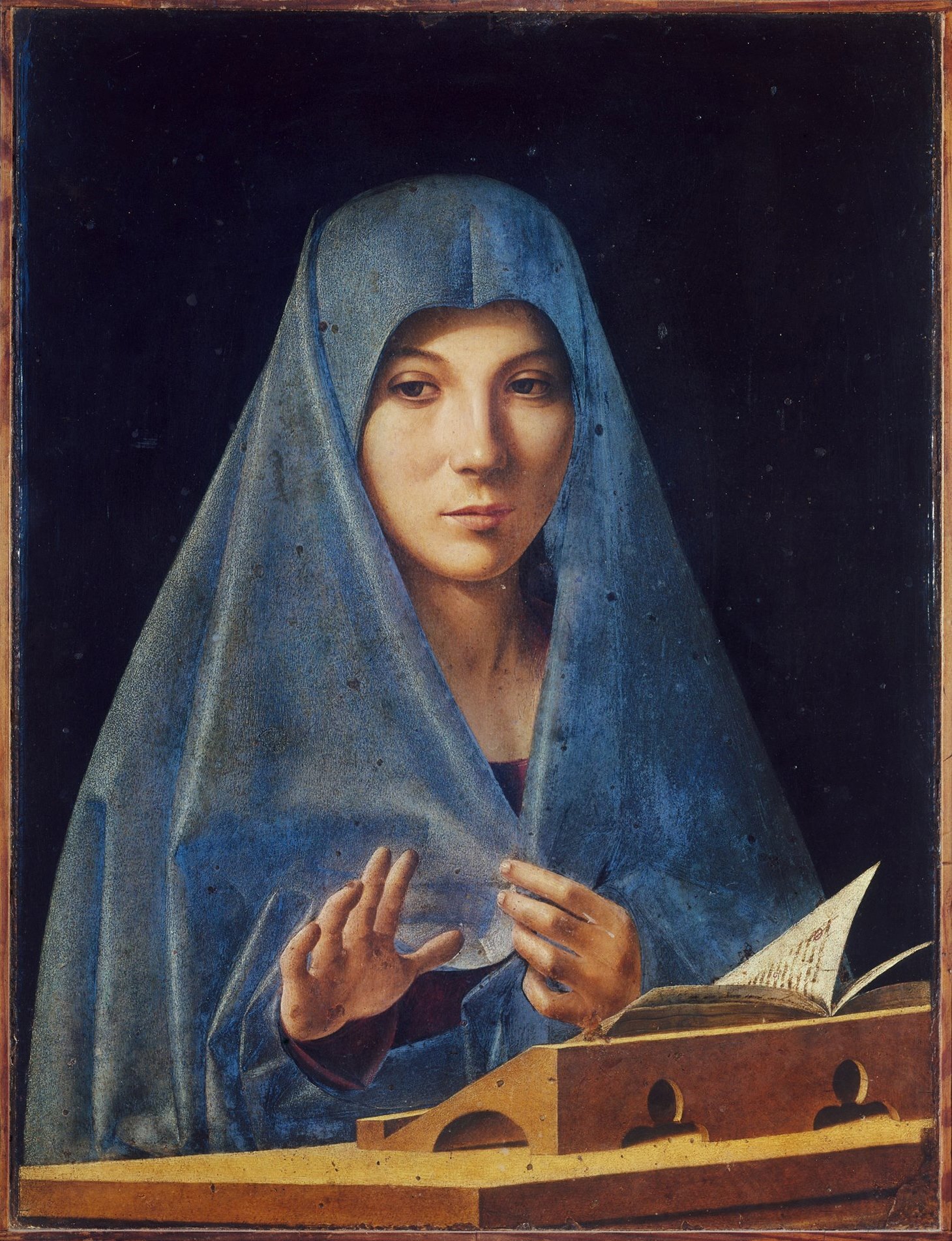
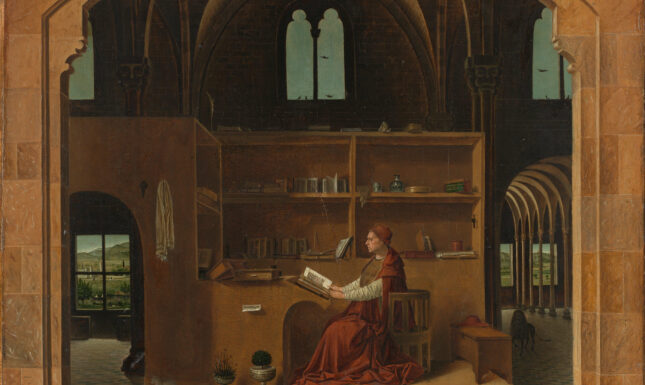
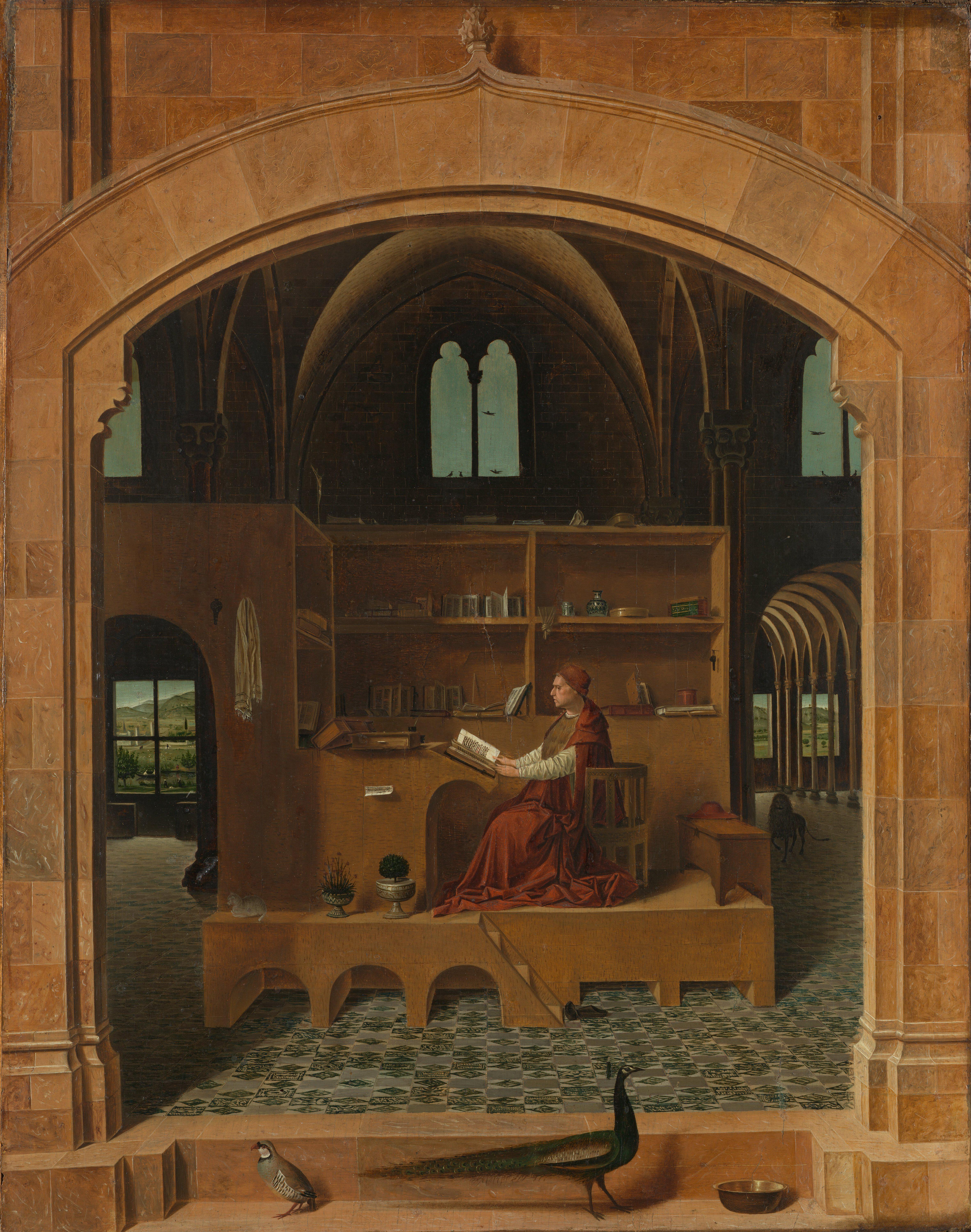
In her response to the theft, the museum’s director Maria Mercurio stressed the works’ “enormous cultural, artistic and symbolic importance, not only for Messina but for Sicily as a whole.” Who, then, was Antonello da Messina? And what does he represent for Sicilians? For indeed, while the Sicilian painter does not have the name recognition of a Raphael or Titian, or even the less famous Filippino Lippi, in his own time he had been an esteemed painter of some renown; and in our own time his works are permanently on display in the world’s most eminent collections, including the National Gallery in London, Musée du Louvre in Paris, and the Metropolitan Museum of Art in New York. Perhaps his best-known works are the Palermo Madonna Annunciate (c. 1475) (Fig. 2) and London’s Saint Jerome in his Study (c. 1475) (Fig. 3); and these certainly are representative for his oeuvre. Antonello often painted devotional works of small dimensions, which later would be in high demand among collectors because of their unusual depiction of familiar iconography, as in the case of the Annunciate Madonna, establishing an intimacy between the subject of his painting and its viewer that few other painters could. He was also admired for the way he offered a window onto landscapes, of inner life and the outer world, sometimes both at the same time, as in his Saint Jerome in his Study. But above all, he was heralded for his painting technique; in fact, Antonello’s “enormous cultural, artistic and symbolic importance” was inherent herein. It was this quality he was admired for most among his peers––a technique painters and patrons in Italy associated with ars nova, paintings from the Low Countries.
Vasari’s convenient construct
Antonello da Messina (c.1430-1479) was deemed important enough by fellow artist Giorgio Vasari (1511-1574) to receive his own biography in the latter’s collection of Lives of the Artists (1550/1568), a project for which Vasari has often been regarded the first art historian. Modern critics of Vasari have rightly called him out for his blatant favouritism of Florentine artists and for making Florence the birthplace of the renaissance, an inheritance art historians grapple with to this day (but the origin of this problem–as with so many problems–lies in the nineteenth century, and Vasari’s contemporaries saw the project for what it was: an ideological one). The truth is that in the fifteenth century various styles had been popular in Italy, and that the artists we now often associate with the dawn of a new age (such as the painter Masaccio) had to compete for commissions with other artists working in a different style, just as popular if not more so. Notably, in Italian principalities, such as Milan, Naples, Mantua, and Ferrara, the aristocratic elites preferred their painted works in a courtly style (commonly referred to as International Gothic, which would later develop into ars nova), fashioning their taste after the Burgundian court of the late fourteenth and early fifteenth centuries, and collecting art works from the Low Countries or painted by local artists in a courtly style. Therefore, Vasari’s focus on Florence’s role in the development of art offers a distorted view, even if–admittedly–that city indeed has an extraordinarily rich story to tell (which, it should be reminded, is also due to the survival of its historic archives).
This becomes even more clearly when we look at the writings of Bartolomeo Facio, a humanist born in Liguria, trained in Verona and Florence, and from 1445 onwards working in Naples in the service of King Alfonso I of Aragón. Here he wrote a short treatise on famous men, De viris illustribus (1456), which included a chapter on artists. Interestingly enough, no painters from Florence were mentioned (though he included the Florentine sculptors Lorenzo Ghiberti and Donatello); and it is immediately clear they had a very different taste in painting at the Neapolitan court, for the painters who did feature were Jan van Eyck, Rogier van der Weyden, Gentile da Fabriano, and Pisanello, none of whom worked in the perspectival style developed in Florence at the beginning of the century. Yet these were the most popular artists at the Italian courts, and especially Van Eyck and Van der Weyden were loved for the intricate detailing of their backgrounds, the use of light and reflection, and, particularly, the translucent glazes of their paintings. This was all made possible due to their mastery of working with oils as a binder, a technique that had been known about and was used even in Italy as early as the beginning of the fourteenth century but was pushed to perfection in the early fifteenth century by Netherlandish artists whose works later became known as ars nova. For Vasari, a mastery of oil technique on par with the artists from the North was, for some reason, embodied by no other painter than Antonello da Messina, and he invented a story that had Antonello bring the intelligence of how to paint with oil from the Low Countries to the Italian peninsula.
In his Life of Antonello da Messina, Vasari employs the Sicilian painter as a narrative hinge to connect the two most populous geographies of Europe and their painting traditions to recount the invention of the oil technique by Jan van Eyck and how this technique eventually ended up in Italy. According to his tale, Antonello got so enamoured by a Van Eyck painting when he was on business visiting the Neapolitan court, he decided to travel to Flanders to meet this Netherlandish master painter from Bruges and learn “his method of colouring in oil.” He stayed there, Vasari writes, until after Van Eyck died, and then returned home “to revisit his native country and to communicate to all Italy a secret so useful, beautiful, and advantageous.” Although this story contains many fabrications (for instance, Van Eyck died when Antonello was eleven, making it highly unlikely that the Sicilian painter would have travelled north at that age), it holds a greater truth that sheds light on the roles played by both Van Eyck and Antonello in popularising oil paintings in Italy, which is where, fundamentally, the latter painter’s “enormous cultural, artistic and symbolic importance” stems from.
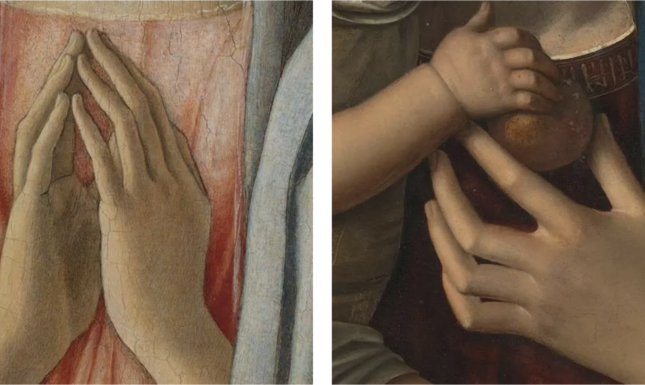
Scholars have found no evidence that Antonello ever travelled to the Low Countries, not even after Van Eyck’s death. It is far more likely that the Sicilian painter learned to paint with oil at the Neapolitan court–where there was a predilection for ars nova–and that another artist named Colantonio (unknown to Vasari) taught him to paint in oil technique (which was, again, not a recent invention–something Vasari must have known since he had read Cennino Cennini’s treatise on art, Libro dell’arte (c.1400), which includes a discussion of “colouring in oil”). In any case, following the supposed return of Antonello from Flanders, Vasari continued his account of the painter with the latter’s stay in Venice, a place where Antonello verifiably had lived and worked, and where Vasari on his visit to the lagoon city in the 1540s must have learned about the existence of the Sicilian painter. It was here where Antonello’s impact was most acutely felt, not least because Giovanni Bellini, the foremost Venetian painter, quickly taught himself to paint like Antonello (Fig. 4 and 5); and one could even argue that the renaissance in Venice did not really take off until the arrival of Antonello and his knowledge of oil technique.
Antonello in Messina
Despite all his success and posthumous glory, Antonello da Messina was first and foremost a Sicilian painter. He was not only the most important painter from the south during the Italian renaissance, but his reputation extended so far beyond his native region that Vasari regarded his achievements as a painter the only suitable context in which to hide the biography of Jan van Eyck––undoubtedly Europe’s greatest painter at the time, yet a figure whose origins lay outside the scope of Vasari’s project. Vasari knew fairly little about Antonello, so this was also convenient padding. More than five hundred years later, we know enough about Antonello to see through Vasari’s fanciful inventions, but we still know little about the Sicilian painter’s life (not unlike Jan van Eyck, for that matter, whose life also remains enigmatic).
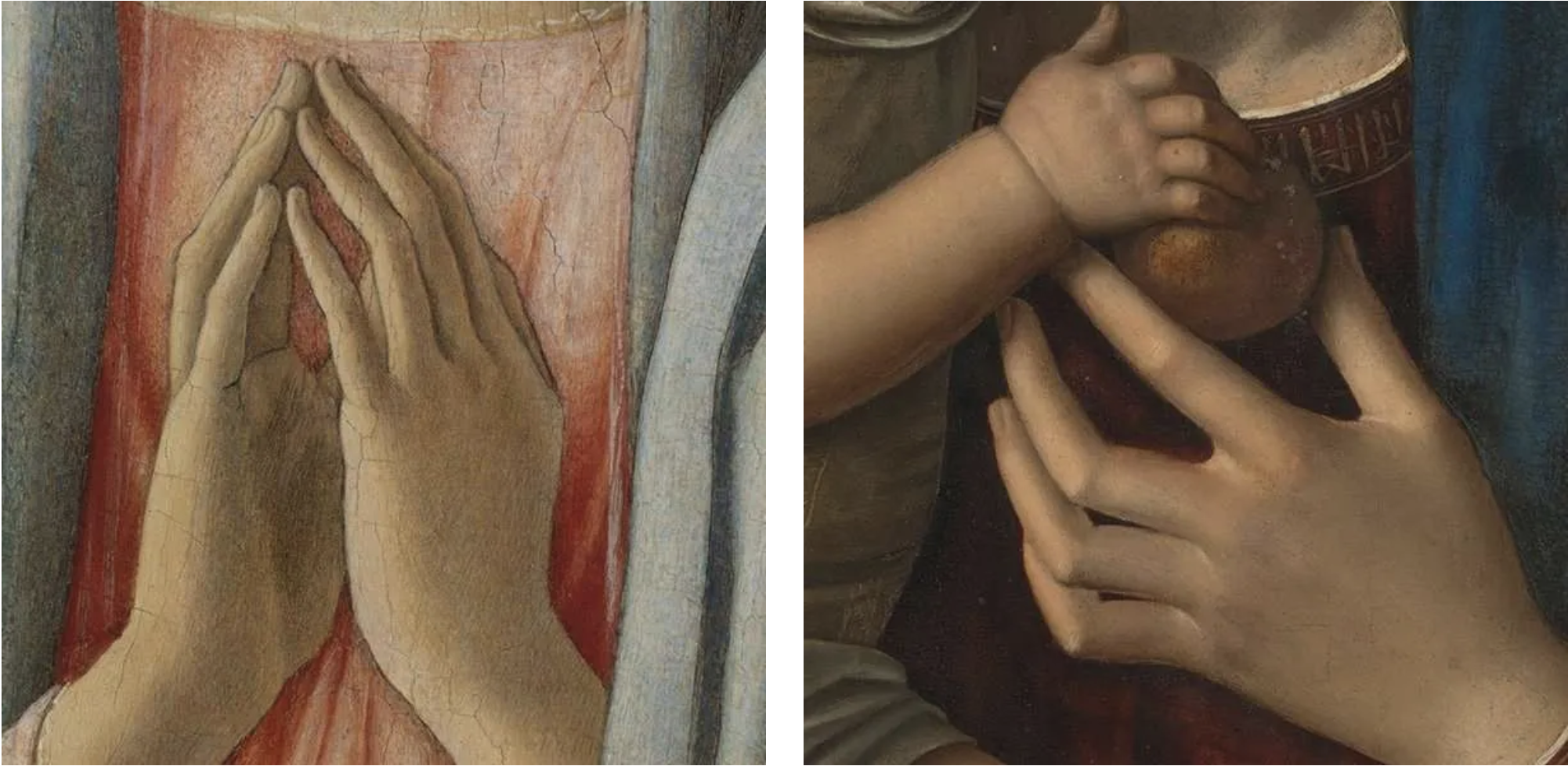
Vasari also knew little about Messina. For Vasari, Messina was a remote outpost he never bothered to visit, even though the city was not a distant backwater in the fifteenth and sixteenth centuries; after all, it was well enough known in Europe to serve as the setting for Shakespeare’s play Much Ado About Nothing. Vasari would have learned a great deal more about Antonello and his works (and we would have too, through him), for it is assumed the Sicilian painter had a lively workshop practice in Messina and received many commissions from local patrons, even if these works no longer exist. His accepted known oeuvre consists of about thirty paintings (of which a disproportionally large number dates from his time in Venice), while estimates of lost works run as high as ninety percent. It is not unreasonable to suggest there used to be more paintings by Antonello in Messina. But in 1783 and in 1908, the city was struck by devastating earthquakes––the one in 1908 followed by a tsunami, killing more than 100,000 inhabitants and destroying most of the city’s art and architecture (not to mention the city’s historic archives). Of the many paintings Antonello once must have made in and for patrons in Messina, only the San Gregorio polyptych of 1473 survives, albeit in a damaged state (Fig. 6). Since then, the Sicilian regional government has attempted to acquire other paintings by Antonello on the art market, resulting in the acquisition in 2003 of Antonello’s tavoletta bifronte, depicting a Madonna and Child blessing a Franciscan friar in prayer (Fig. 7) and Christ as the Man of Sorrows. Art historians do not consider its dense pattern of fine cracks as damage but an attest to its outstanding oil technique, which tends to crack over time, as one can also observe in so many Netherlandish oil paintings.
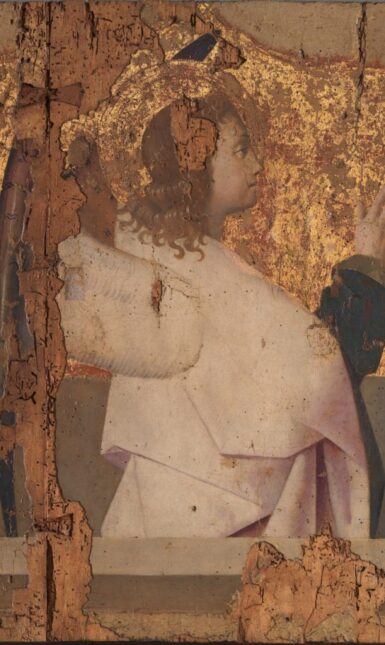
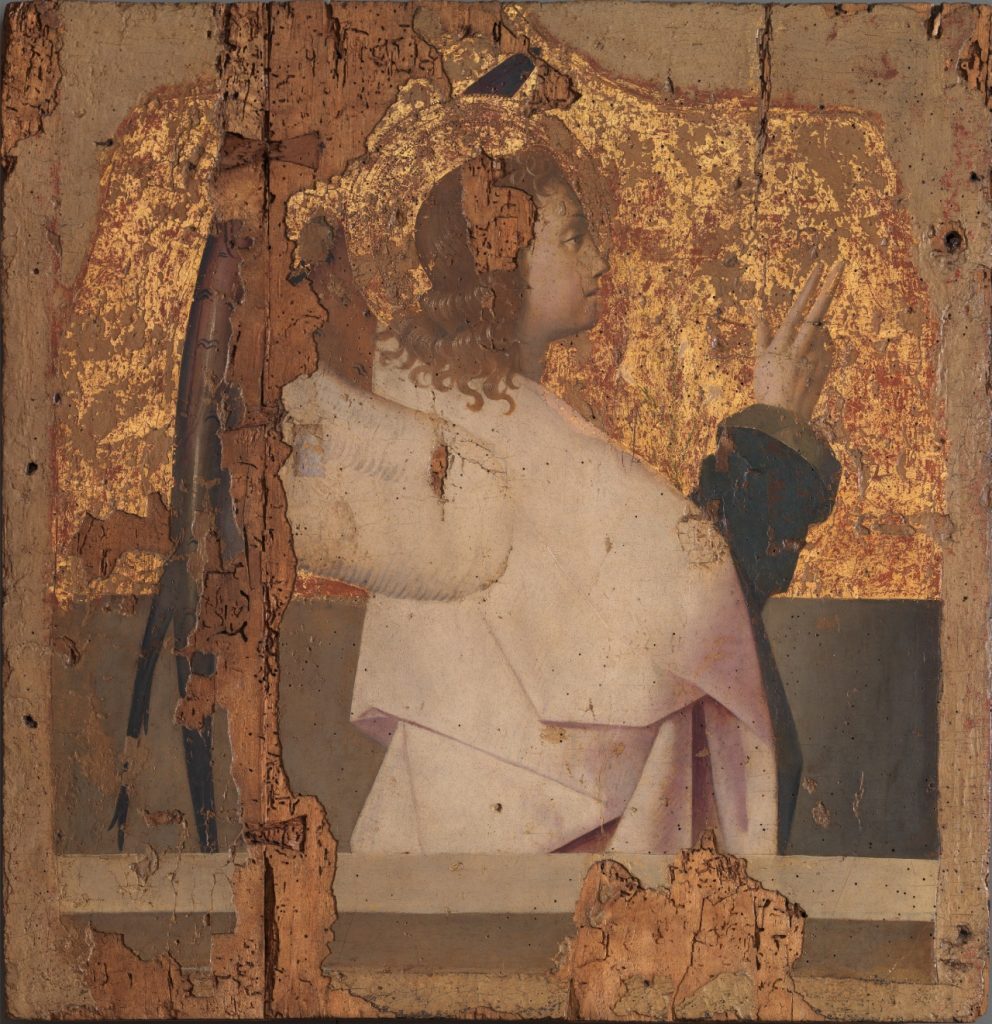
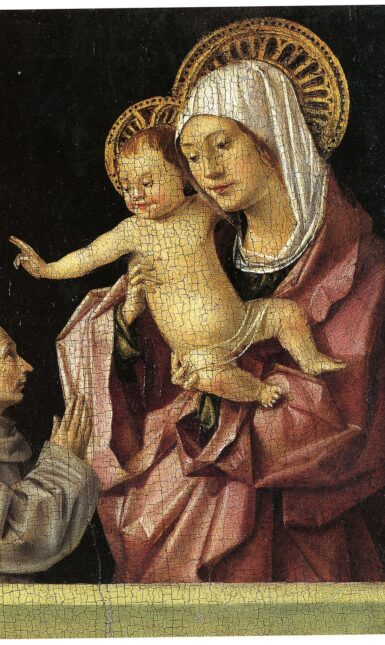
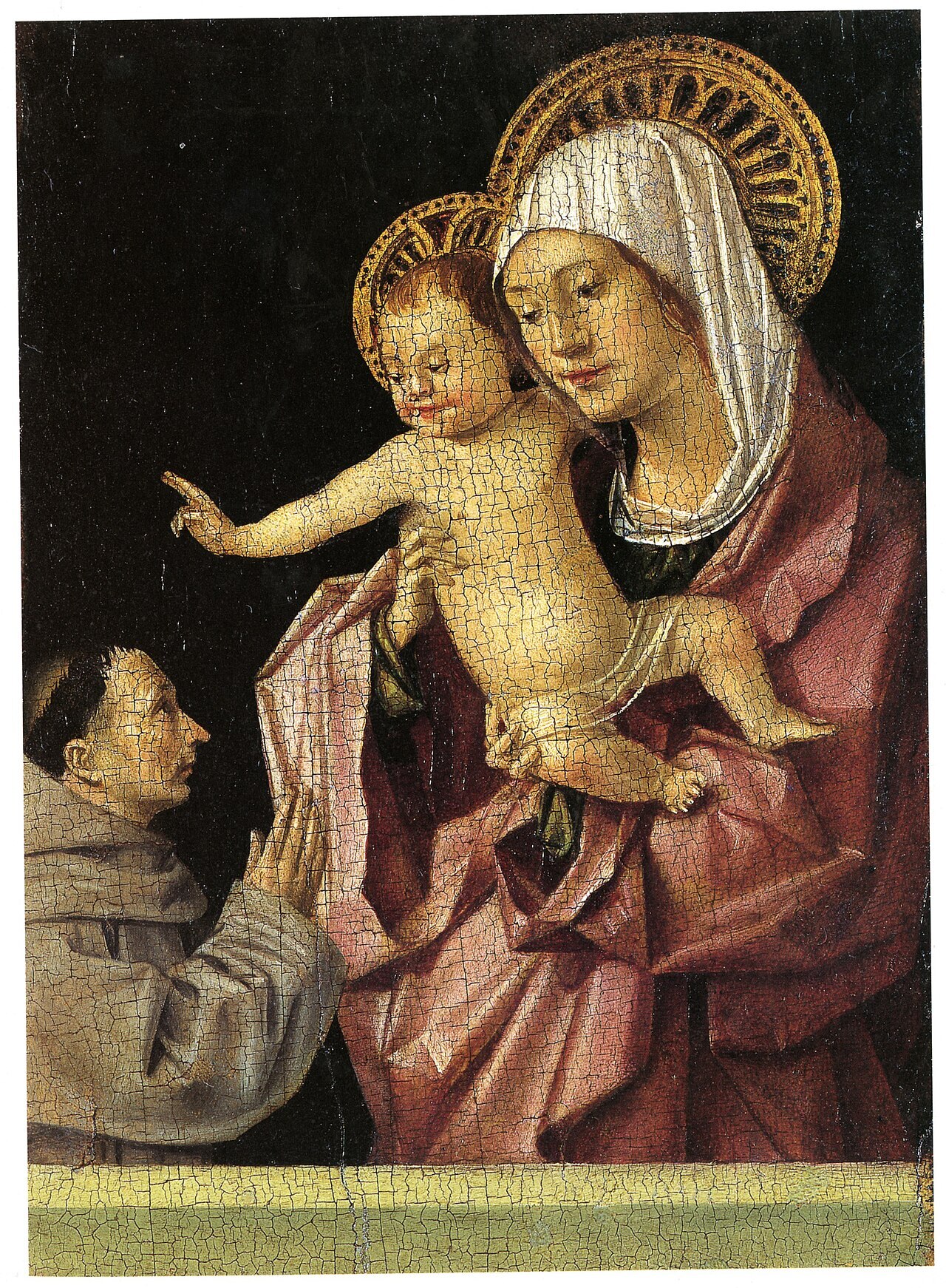
The 2026 Ferragosto theft of precisely these works–the only ones by Antonello in his hometown–is therefore a tragic loss for the local community. The thieves only needed 90 to 120 seconds to break into the museum, remove the works from their displays, and flee; this points to inside help, a lead the police are actively investigating. Comparisons with the brazen 1990 heist from the Isabella Stewart Gardner Museum in Boston have been drawn, but we can only hope that recovering Antonello’s works will not take as long (given that those works have never been found). An additional loss for Messina is the dashed hope that Antonello’s Ecce Homo, acquired earlier this year by the Italian government for a record-breaking $14.9 million, will find a permanent home in Messina. The only consolation is that, for inexplicable reasons, the thieves left two panels of the San Gregorio polyptych (the panels with the saints) outside the museum, allowing the community of Messina to still enjoy the last of Antonello's works held in public ownership. The panel with Saint Gregory shows why Antonello was such an exceptional master: a small scar, very subtly painted below the left side of Saint Gregory’s mouth, reminds us that even a saint sometimes cut himself while shaving.
Further reading:
Bremenkamp, Adrian. Ars nova translata: Altniederländische Malerei in Neapel und der Krone Aragon. Römische Studien der Bibliotheca Hertziana 49. Hirmer, 2021.
Lucco, Mauro, and Giovanni Carlo Federico Villa (eds.). Antonello da Messina: l’opera completa. Silvana Editoriale, 2006.
Rowland, Ingrid D. The Lies of the Artists: Essays on Italian Art, 1450-1750. The MIT Press, 2024.
Vasari, Giorgio. Lives of the Painters, Sculptors and Architects. Translated by Gaston du C. de Vere. Everyman’s Library Classics Series, 1996.
Podcast about the 1990 heist from the Isabella Stewart Gardner Museum in Boston: Horan, Kelly, Stephen Kurkjian, and Jack Rodolico, Last Seen, Season 1. WBUR and The Boston Globe, 2018. https://www.wbur.org/podcasts/lastseen/last-seen-season-one
© Wouter Wagemakers and Leiden Medievalists Blog, 2026. Unauthorised use and/or duplication of this material without express and written permission from this site’s author and/or owner is strictly prohibited. Excerpts and links may be used, provided that full and clear credit is given to Wouter Wagemakers and Leiden Medievalists Blog with appropriate and specific direction to the original content.