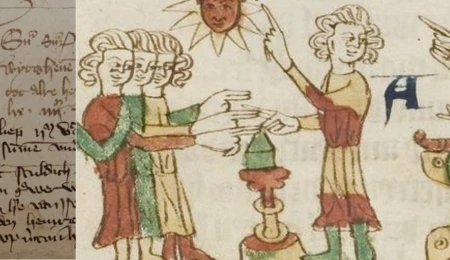
To be continued. Medieval and modern motivations for literary continuation Series, sequels and spin-offs are at the centre of the modern media landscape. But our literary culture has a rich history of continuation and narrative transformation, in particular when it concerns the medieval romance tradition. Jelmar Hugen • April 05, 2024
Op zoek naar de bijl van Sint-Olav Een bijl, een aartsbisschop en een scheepswrak. In dit blog blikt Louis Sicking terug op zijn zoektocht naar kerkschatten uit middeleeuws Noorwegen. Louis Sicking • March 22, 2024
YouTube series on the 'East' and the 'West' in the Early Middle Ages: Behind the Scenes How do you go about making a YouTube series on cultural contacts between early medieval England, Northern Africa and the Middle East? Fatima al Moufridji shares her behind-the-scenes experiences. Fatima al Moufridji • March 08, 2024
The Discovery of the Middle Ages in Korea The Vestiges of the Three Kingdoms of Ancient Korea (Samguk yusa) is the most famous medieval text from the Korean peninsula, occupying a central position in research into the period and in the maintenance of Korean identities. Its coming-into-being as a seminal text however is not straightforward. Remco Breuker • February 23, 2024
Multilingualism in Anglo-Saxon England: The art of glossing and translating We are hardly shocked when visiting different countries and cities to hear a variety of languages. However, the reality of multilingual spaces and societies predates our modern times, as a study of the Anglo-Saxon period shows. Elisa Ramirez Perez • February 09, 2024
Artificial Intelligence Meets the Middle Ages: Making or Faking History? The Middle Ages and Artificial Intelligence seem to be worlds apart, but AI technology is affecting the ways in which we look at the Middle Ages. Let’s explore the upsides and downsides of AI through the eyes of a medievalist. Bram Caers • January 31, 2024
Living as a Roman Citizen in Byzantine Rome: The Archaeology of Exchange and Identity The city of Rome went from inviting the Byzantine army in 536 to shoving aside Constantinople by declaring the Frankish king Charlemagne emperor in 800. How did this happen? Clues to the cause for this radical twist may be found in the archaeological record. Kee-Lou Ooyman • January 19, 2024
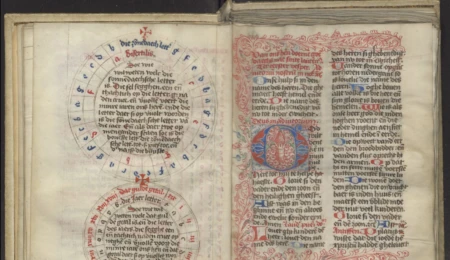
Medieval Manuscripts Catalogued in Leiden: Old and New Practices Since its establishment, Leiden University Libraries has assembled 1400+ codices from medieval Europe and some thousand manuscript fragments. Their presentation in catalogues and inventories has changed radically over time. André Bouwman • December 11, 2023
Changing tastes through time: A foodlab at Paleis Het Loo In the foodlab at Paleis Het Loo, we tried to find out how current tastes compare to those of premodern times. Joanita Vroom • December 08, 2023