Textiles in medieval archaeology

Clothing, we wear it every day and it is physically the closest we can get to the people of the past. Quite literally, their blood, sweat, and tears are intertwined within those objects.
The way we produce clothing and care for it tells us something about who we are, not only as individuals but also as a society. Fashion of the past shows us what was important to them and how they wanted to be perceived. It reveals profound insights into status, religion, and trade. Based on these premises, one would argue that clothing is rigorously studied in archaeology because of the enormous amount of information it contains about both the individual and society. This, however, is not the case. In the past, textile remains were thrown away during excavations, and even nowadays, these fragments are often not recognised. Consequently, the study of this material group has not reached its full potential, despite the emergence of new opportunities for further research and the immense potential for gaining new knowledge. This blogpost revolves around the question of how archaeology can help us to discover not only how people dressed during the Middle Ages, but also how their clothing was made.
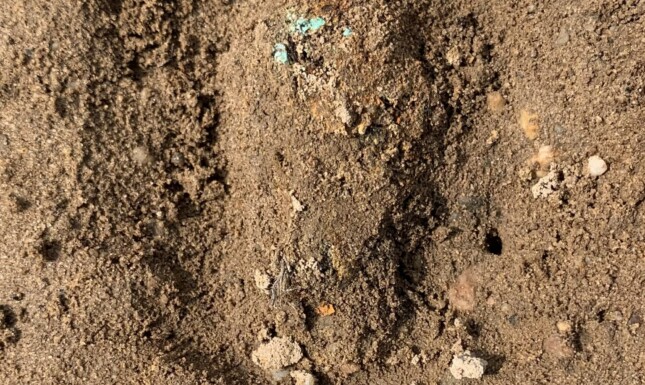
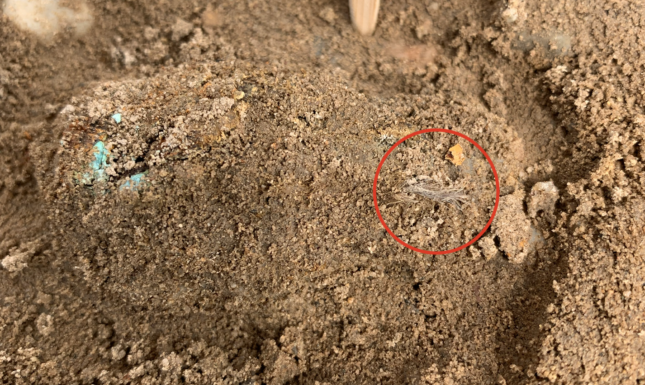
Fig. 2 (left) and 3 (right): A metal find during excavation, with some fibres emerging from the soil at the bottom. On the right is a close-up with a red circle around the fibres (source: Jip Seijkens).
The bottleneck of preservation
In Dutch archaeology, textiles are mainly found in cesspits, manure layers, and shipwrecks, but sometimes also in other contexts (Rijksdienst Cultureel Erfgoed, 2016). For the preservation of these textile fragments, it is important that they are kept in a wet environment. The acidity of the soil also plays a crucial role. Wool fibres are best preserved in an acidic environment, while plant fibres such as linen survive best in alkaline conditions (Rijksdienst Cultureel Erfgoed, 2016). Textiles can also be found in grave contexts and are best preserved when in contact with metal (Rijksdienst Cultureel Erfgoed, 2016). Striking examples include the textile fragments preserved on a woman's bracelets in a grave in Uden (Jansen, 2021), and those on a piece of metal found on the upper body of a human silhouette, as seen in figures 2 and 3.
Part of the problem is that textiles are prone to deterioration, meaning that archaeologists are on the frontline to prevent these fragments from decaying. However, the necessary steps are not an easy fix. When textiles are found during an excavation, it is important to keep them from drying out and to keep them out of direct sunlight, as it can damage the fibres. Moreover, a textile specialist must be contacted on the same day the object was found. The finds also need to be properly documented in the field before they are taken out of context. Ideally, this is done by lifting them en bloc so the textile is not damaged (Stichting Infrastructuur Kwaliteitsborging Bodembeheer, 2014).
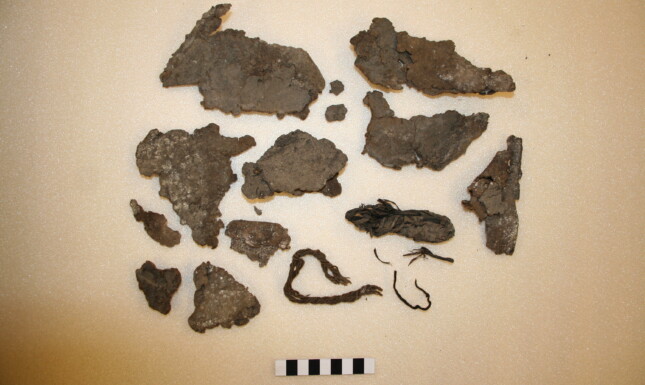
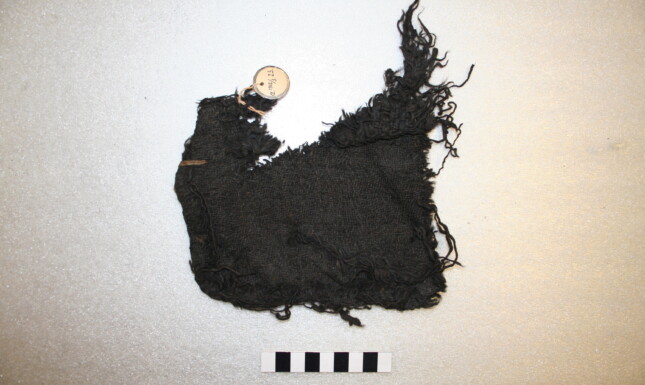
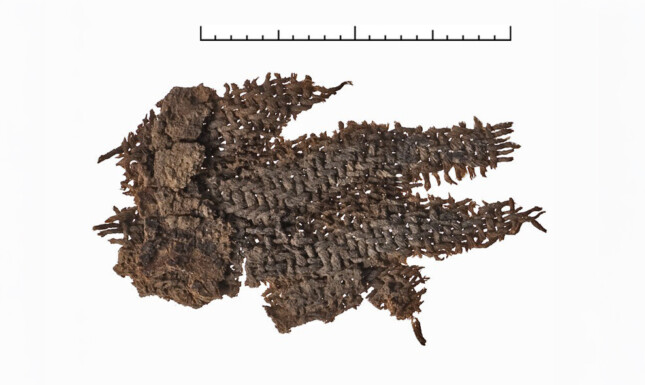
Fig. 5, 6 and 7 (from left to right): Two early medieval textile fragments from Dokkum, and one from Bergeijk (source: National Museum of Antiquities).
The art of recognising textiles
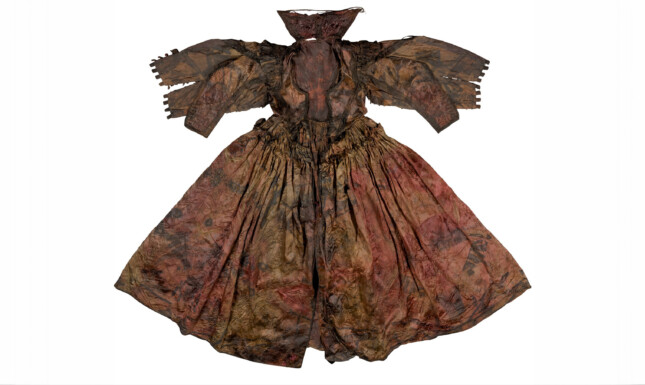
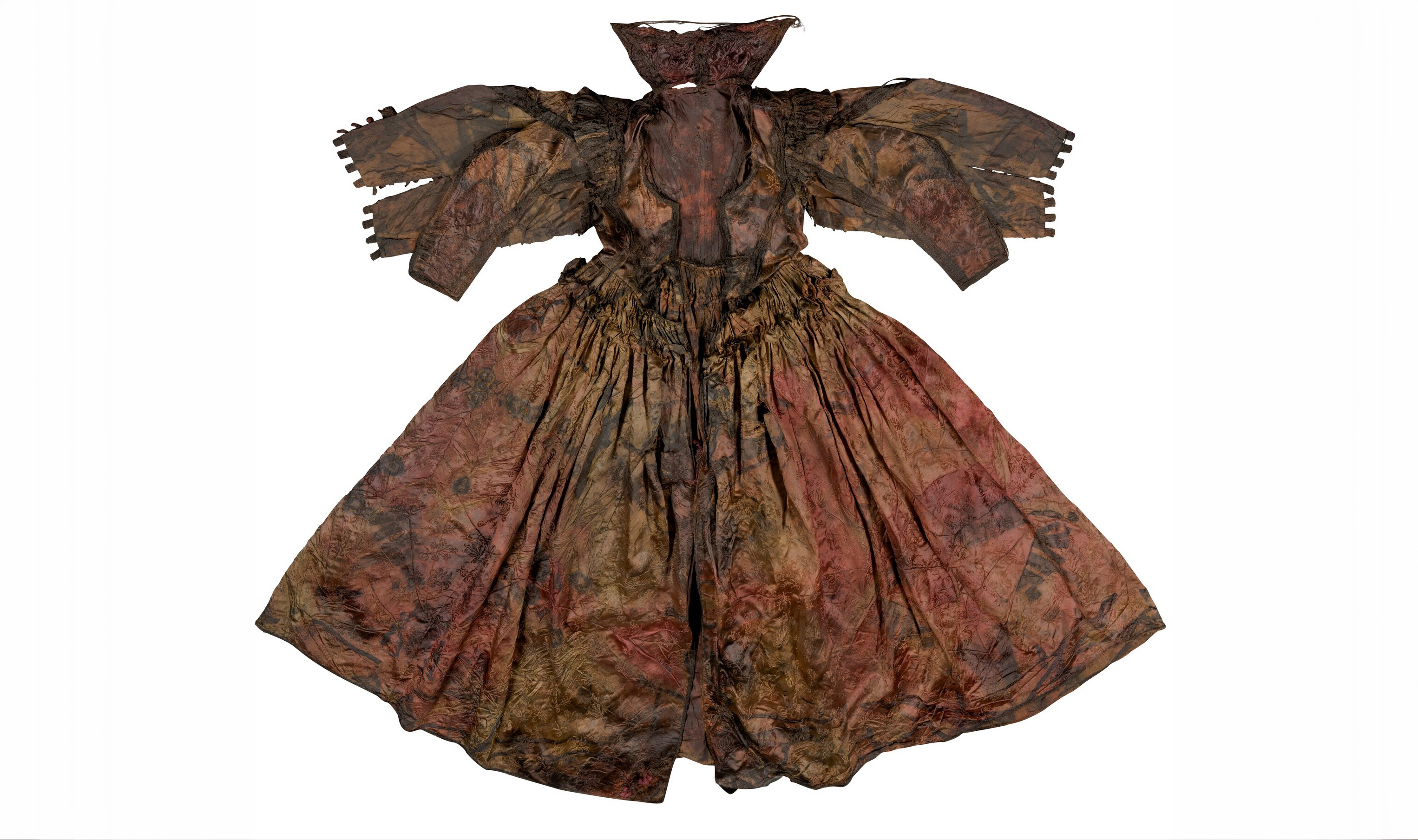
Occasionally, clothing items are extremely well preserved, giving us a glimpse of how they looked when complete and in their original colours. A rare example is a dress from the Palmwood wreck found in the North Sea (see figure 4). Due to specific circumstances, shipwreck finds are among the best-preserved examples of textiles from an archaeological context. However, most textile finds from excavations are very fragmented. Medieval textile fragments from the collection of the National Museum of Antiquities (RMO) are a good example of the harsh reality of textile remains as rather unrecognisable, colourless lumps (see figures 5-7). To complicate things, textile finds can also look like they do in figure 2 and 3: as small fibres sticking out of a metal find.
Though these small pieces might look rather insignificant, their potential scientific value can be the opposite (Jansen, 2021). For instance, the thread count, the weaving pattern, the materials used, the thickness, the colour, and the stitching can inform us about the production process, techniques applied, and trade routes.
What if...textiles are not preserved at all?
Because of post-depositional processes (which occur after burial), time has a devastating impact on organic materials, and more often than not, textiles are not preserved at all. So how can we research textiles from a medieval context if none of them have been preserved? That is where use-wear analysis comes in. By looking at the tools that were used for various steps of the production process, we can still indirectly do research on textile production, material choices and the techniques that were applied. An example is early medieval Dorestad, where numerous bone objects have been excavated, including needles. Based on the traces on these needles, we can say something about the materials they were in contact with, such as wool and linen (Kromotaroeno, 2025). Use-wear analysis can not only show us which material was processed, but also the way in which this was done.
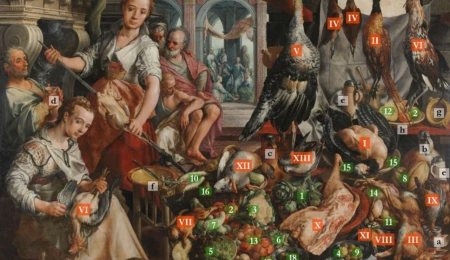
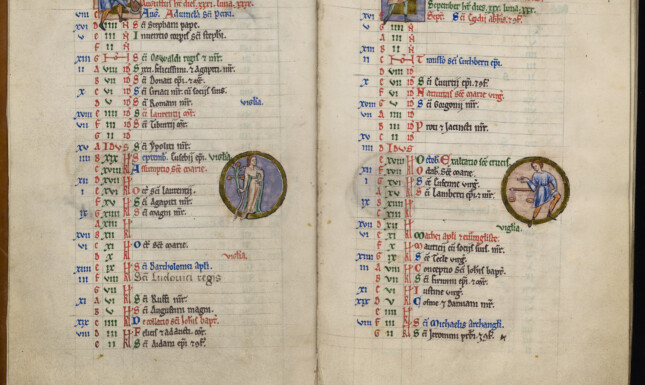
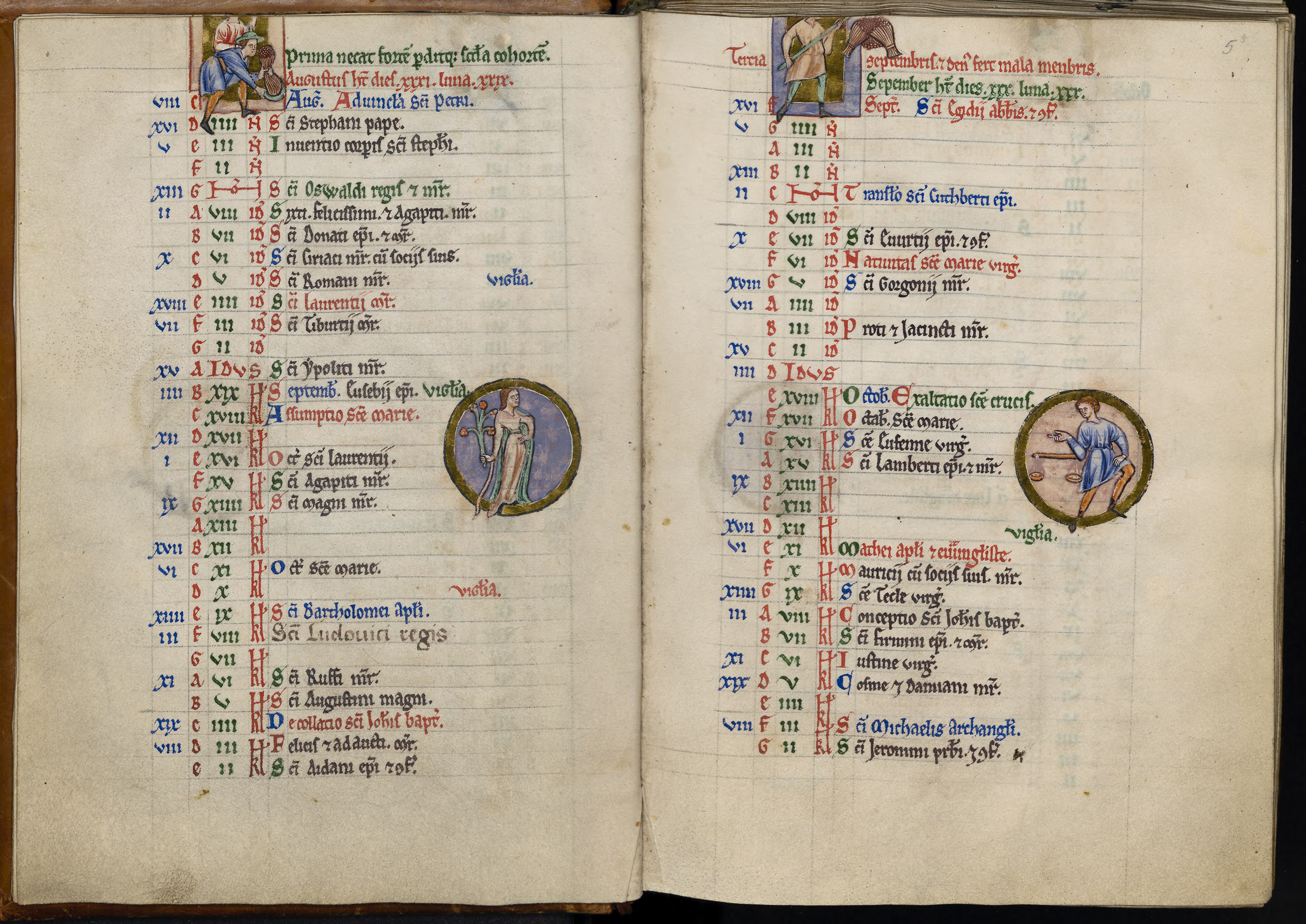
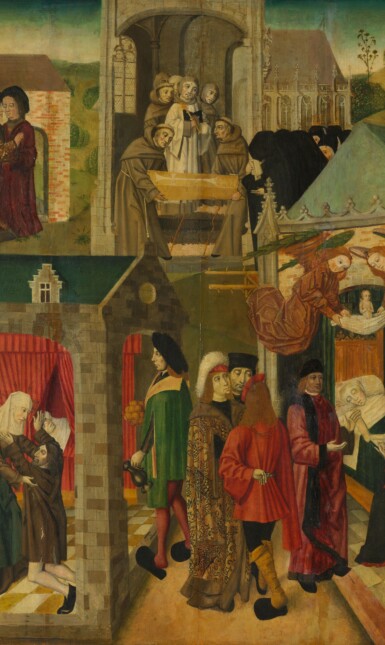
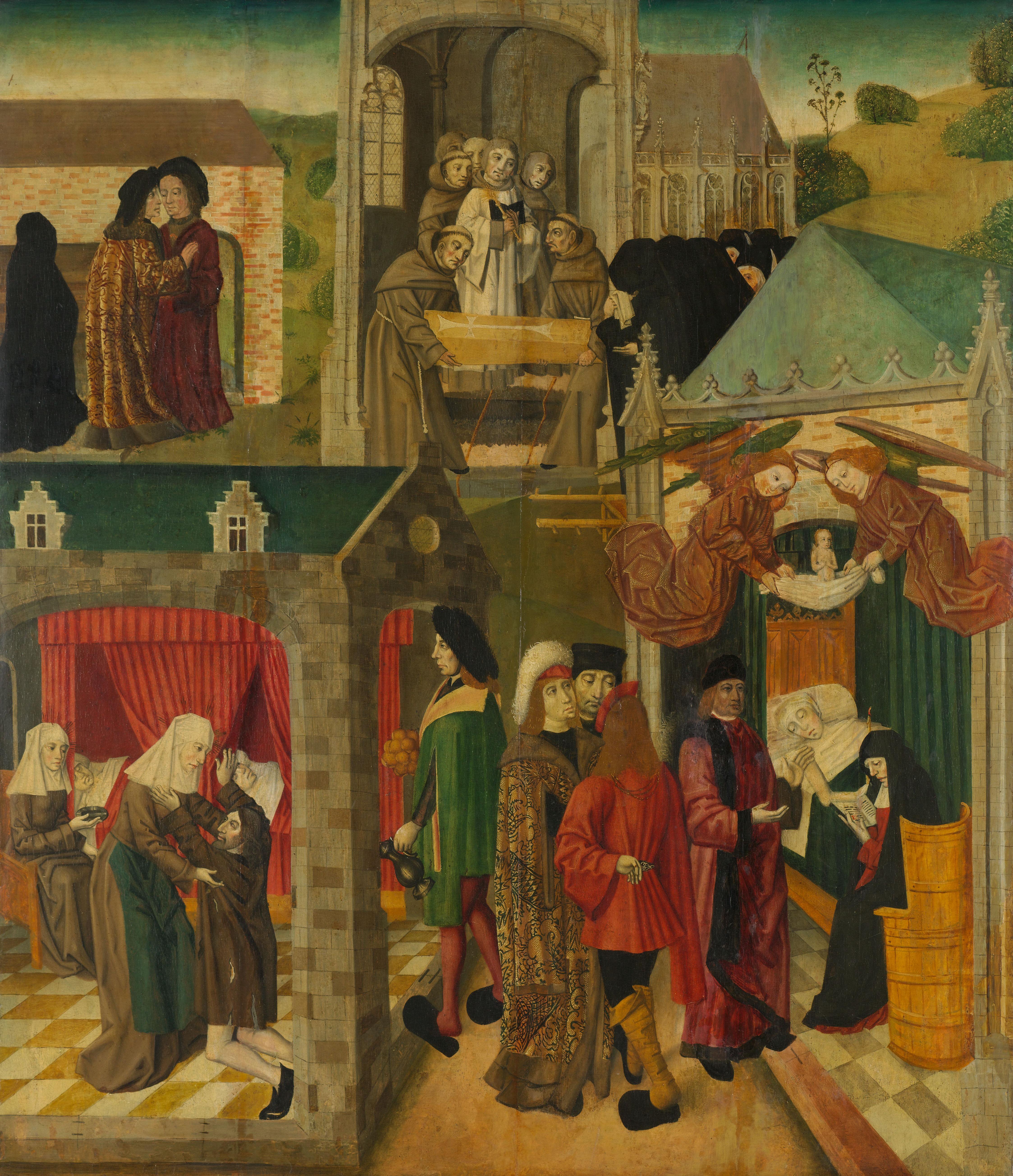
Another way to learn more about historical clothing is by looking at other sources, such as archival material. Manuscripts and paintings can inform us about the silhouette of a certain period, differences in status, and fashion trends (see figures 8 and 9).
Conclusion
Archaeological textile research depends heavily on finds being in a good enough condition to allow for further analysis, something in which excavation practices play a crucial role. By structurally incorporating specialists, such as textile specialists and use-wear analysts, into the Progamma van Eisen (the Dutch excavation protocol), we can ensure that they are contacted and that sufficient resources are available for specialist support during fieldwork and analysis for the final excavation report.
Especially by combining archaeological finds, use-wear analysis, and historical sources, we are able to learn more about the use and production of textiles than by focusing only on one of these sources alone.
Hopefully, in the future, the potential and challenges of archaeological textiles will become well-known facts. This will help prevent the unnecessary loss of textile fragments and allow us to gain even more knowledge from the rare pieces that have survived over time.
Bibliography
Jansen, R. (2021, June 9). Onderzoek onthult de geheimen van de oudste jurk van Nederland. Universiteit Leiden. https://www.universiteitleiden.nl/in-de-media/2021/05/onderzoek-onthult-de-geheimen-van-de-oudste-jurk-van-nederland
Kromotaroeno, C. (2025). In short: needles and what they tell us about Dorestad. In A. Willemsen, & H. Kik (Eds.), Papers on Archaeology of the Leiden Museum of Antiquities (pp. 115-120). Sidestone press. https://doi.org/10.59641/n6q2k3l4m5
Museum Kaap Skil. (n.d.). The Dress from the Palmwood wreck. https://kaapskil.nl/en/discover/collection-highlights/the-dress/
Rijksdienst Cultureel Erfgoed. (2016). Op welke wijze komen identiteit en maartschappelijke positie tot uitdrukking in kleding? (NOaA 2.0-vraag 134). Rijksdienst Cultureel Erfgoed. https://noaa.cultureelerfgoed.nl/researchQuestion/741641e0-ca4b-47c1-8b0f-ef7b9ec52b3f
Stichting Infrastructuur Kwaliteitsborging Bodembeheer. (2014). Eerste hulp bij kwetsbaar vondstmateriaal. https://www.sikb.nl/doc/archeo/Waaier%20Eerste%20Hulp%20-%20druk%202014.pdf